
As the global energy transition enters a more complex phase, investors are moving beyond broad ‘green’ sustainability narratives and focusing more sharply on the fundamentals that make infrastructure projects bankable, investable and scalable.
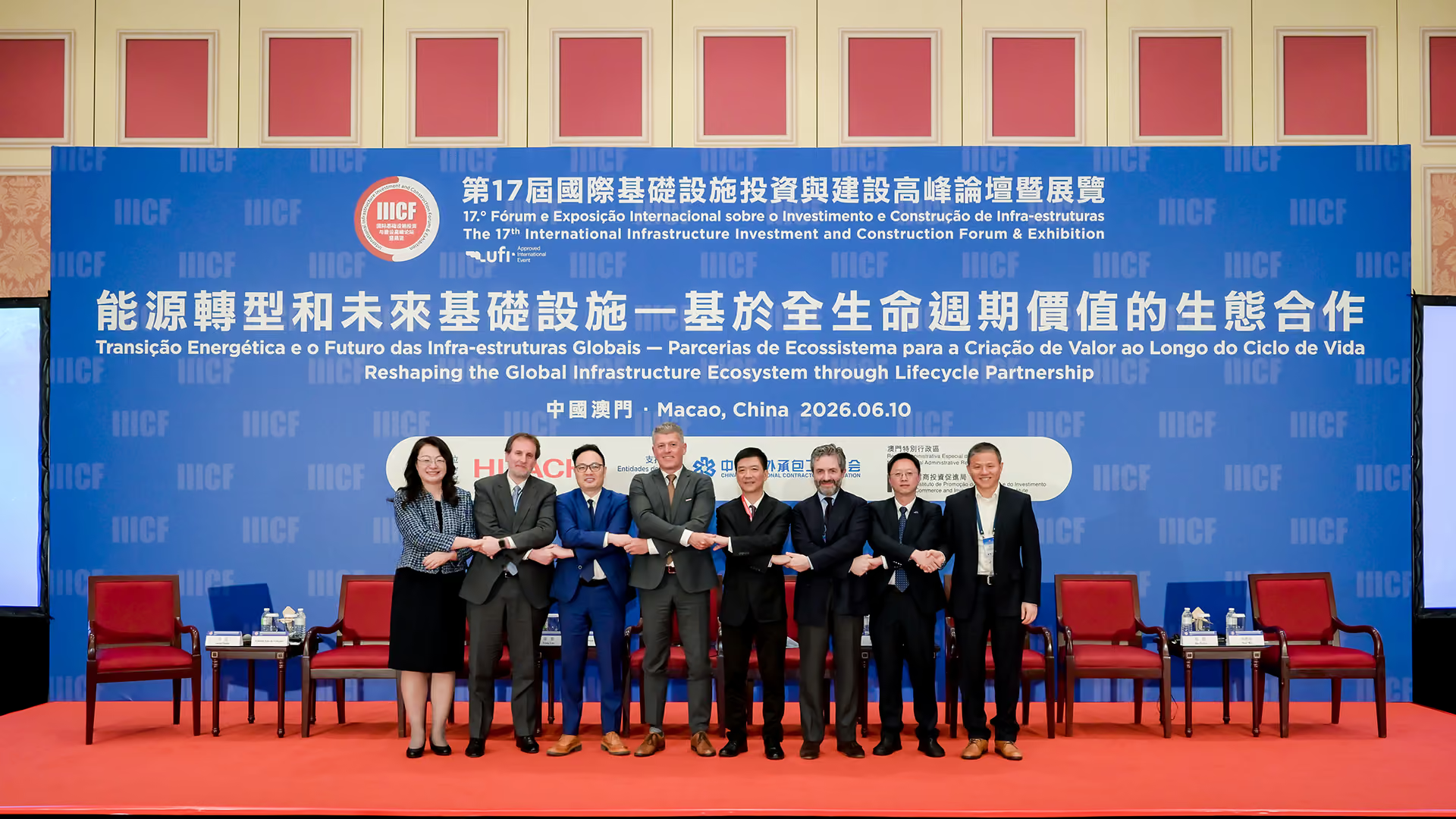
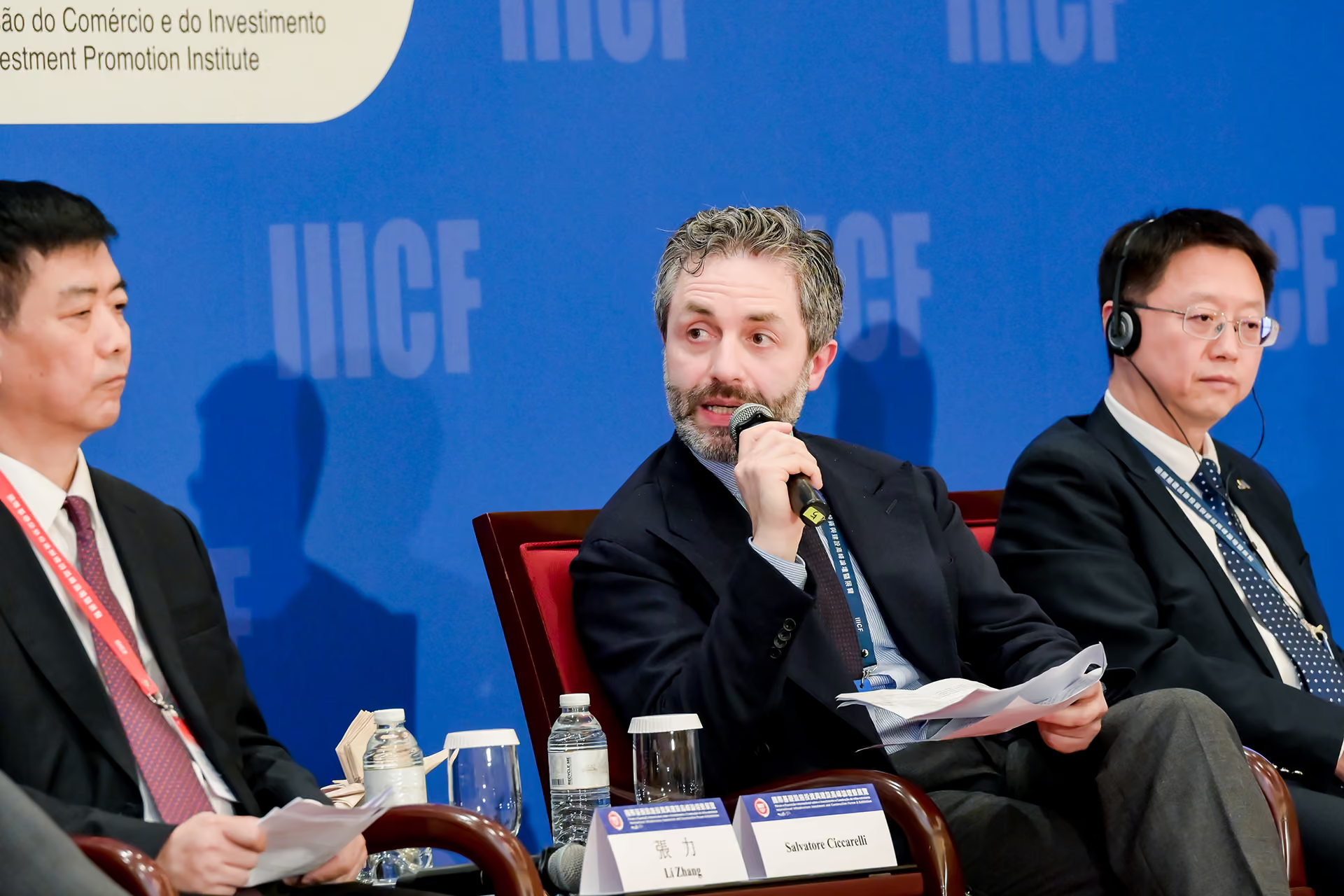
This was the central message from Mizuho’s Salvatore Ciccarelli, Co-Head of Infrastructure & Advisory, EMEA, who joined a panel at the 17th International Infrastructure Investment & Construction Forum in Macau, China. Speaking during a Hitachi Energy-hosted sub-forum, “Reshaping the Global Infrastructure Ecosystem through Lifecycle Partnership”, Ciccarelli explained how capital allocation in energy infrastructure is becoming increasingly selective.
The core issue: cashflow certainty
At the early screening stage, Ciccarelli said the key test is whether a project can deliver predictable, risk-adjusted cashflows through a financeable structure.
“I would simplify the question into one core issue: can this project deliver predictable risk-adjusted cashflows through a financeable structure?” he said. “There are a few critical filters.”
The critical filters include revenue quality, technological maturity, policy and the regulatory environment and sponsor credibility. Together, they determine whether a project can attract long-term capital and withstand lender and investor scrutiny.
“Revenue quality matters,” Ciccarelli said. “Is revenue contracted or merchant? Who is the off-taker? How durable is the cashflow profile? Even technically excellent projects become difficult if revenue visibility is weak.”
Construction deliverability is equally important. Projects need credible engineering, procurement and construction arrangements, resilient supply chains and an execution plan investors can underwrite. Technology risk also remains central, particularly in emerging areas of the energy transition where performance assumptions may not yet be fully tested.
“Capital tends to be much more comfortable where technology risk is well understood,” he said. “Transition assets can also be highly policy-sensitive. Even strong economics can be undermined by unstable regulatory frameworks.”
Bankable, investable and scalable are not the same thing
Ciccarelli also highlighted a distinction between projects that can be financed, those that offer attractive investment characteristics and those that can be scaled across markets.
“Bankable does not always mean investable, and investable does not always mean scalable,” he said. “A highly contracted project may be financeable but offer limited upside. A merchant opportunity may be attractive strategically but harder to leverage. Ultimately, it is about balancing certainty, return and scalability.”
This distinction matters more as capital moves beyond established renewable generation into the assets needed to support the energy transition. Investors are assessing not only whether projects are commercially viable, but whether they can support wider system resilience and decarbonisation objectives.
Green capital is becoming more discriminating
Looking ahead, Ciccarelli expects capital to continue flowing into areas with clear system value, strong demand visibility and well-understood risk profiles. Grid infrastructure, storage and flexibility assets, transmission networks, electrification-enabling infrastructure and selected low-carbon dispatchable solutions are all expected to remain attractive.
“These are areas where demand visibility and structural relevance are strong,” he said. “Areas requiring caution are those where commercial models remain less mature or heavily policy-dependent.”
“Green finance is entering a more disciplined phase,” he said. “A few years ago, capital was often driven by thematic enthusiasm. Today, investors are increasingly focused on fundamentals: risk-adjusted returns, execution credibility and policy clarity.”
As governments, sponsors and financial institutions seek to scale low-carbon systems, translating long-term demand into credible, financeable projects is becoming one of the sector’s defining challenges.
“Green capital is not disappearing – but it is becoming more discriminating,” Ciccarelli said. “One interesting trend is the growing importance of transition capital, not just pure green capital. That means supporting infrastructure that enables decarbonisation pathways, even if it is not a perfect ‘green’ label opportunity.”
Connecting global capital with infrastructure opportunities
With a strong presence across America, Asia and Europe, Mizuho’s role is to support clients across the infrastructure lifecycle, combining strategic advisory, structuring expertise and financing capabilities to deliver complex, cross-border solutions – from capital to counsel.
Mizuho is helping to connect global capital with infrastructure opportunities that support resilient, low-carbon systems.
As Ciccarelli put it: “Ultimately, capital follows clarity. Where risk allocation, policy frameworks and commercial models are credible, capital will come. Where uncertainty remains too high, even strong narratives may not be enough.”


.jpg)