
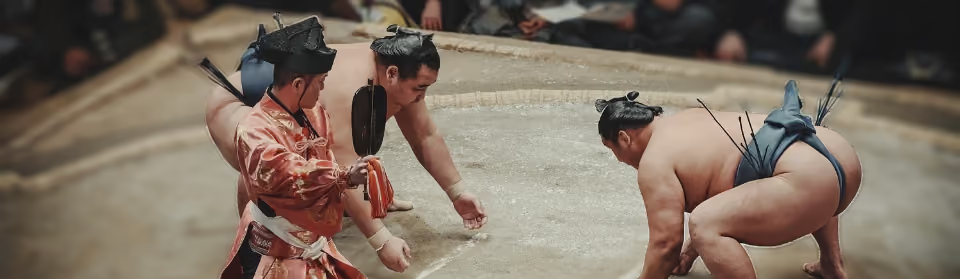
Sumo was born out of a Shinto ritual to entertain gods
The first mention of sumo dates back 1,500 years. It has been found in a Kojiki (Records of Ancient Matters) manuscript, which describes how the possession of the Japanese islands was decided in a wrestling match between two gods. Sumo is still very closely tied to its religious origins and the daily routines of sumo wrestlers (rikishi) are largely governed by Shinto principles.
Pouring sake, burying charms and spraying salt
A ring blessing (dohyo matsuri) takes place before each tournament begins. The head referee (gyoji) takes the role of the priest and blesses the ring by pouring sake and burying six good luck items (shizumemono) to ‘calm the spirits’. Before a match, you can also see sumo wrestlers throwing salt as a purification practice to cleanse the ring.
The head games start before the battle begins
Sumo wrestlers start their match in the middle of the ring, crouched over two white lines (shikirisen), and watching each other closely before making a move. While a judge might give the signal to start, the match doesn’t begin until both sumo wrestlers indicate they’re ready by placing their fists on the ground.
Blink and you will have missed it
A bout of sumo can end in just a matter of seconds. A 4-minute match is considered long, and the referee may consider a break. There are no weight restrictions in sumo, so it is possible for wrestlers to end up facing opponents that are much bigger than them.
300 kilograms
An average sumo wrestler weighs around 150 kilograms. The heaviest professional sumo wrestler title is currently held by Orora Satoshi, weighing a staggering 292.6 kilograms. To put it into perspective, this is the equivalent of 2/3 of a grand piano, or two pandas added together.
10,000 calories a day
A sumo wrestler typically consumes somewhere between 7,000 to 10,000 calories every day. The chanko nabe, or ‘sumo stew’, is a protein-rich hotpot packed with meat, tofu, vegetables and rice or noodles that sumo wrestlers eat in large quantities to help them get big. You can find chanko nabe served in restaurants across Japan, especially in the Ryogoku district, the ‘heartland’ of sumo.
Doing the ‘splits’
An important part of sumo training is to be flexible to avoid injuries. They must be able to practice the ‘splits’, which involves stretching their legs to the left and right at 180 degrees while touching their torso and have their chin flat on the floor.
Common phrases you might hear in a sumo match
• ‘Hakki-yoi!’ is what the referee shouts when the wrestlers are in a stand-off – it roughly translates to ‘come on’ or ‘put some spirit into it’.
• ‘Nokotta!’ indicates the bout is still undecided and lets the wrestler know that they are ‘remaining’ or that they are ‘still in it’.
• ‘Shobu-ari!’ is declared at the end of the match when a winner emerges, meaning ‘the match has been decided’.