
.avif)
Women’s sports are no longer a niche investment. With global revenues in elite women’s competitions on track to surpass $3 billion in 2026 – a 340% increase since 2022 – and team investments growing at nearly triple the rate of men’s sports, the business case is becoming increasingly compelling.
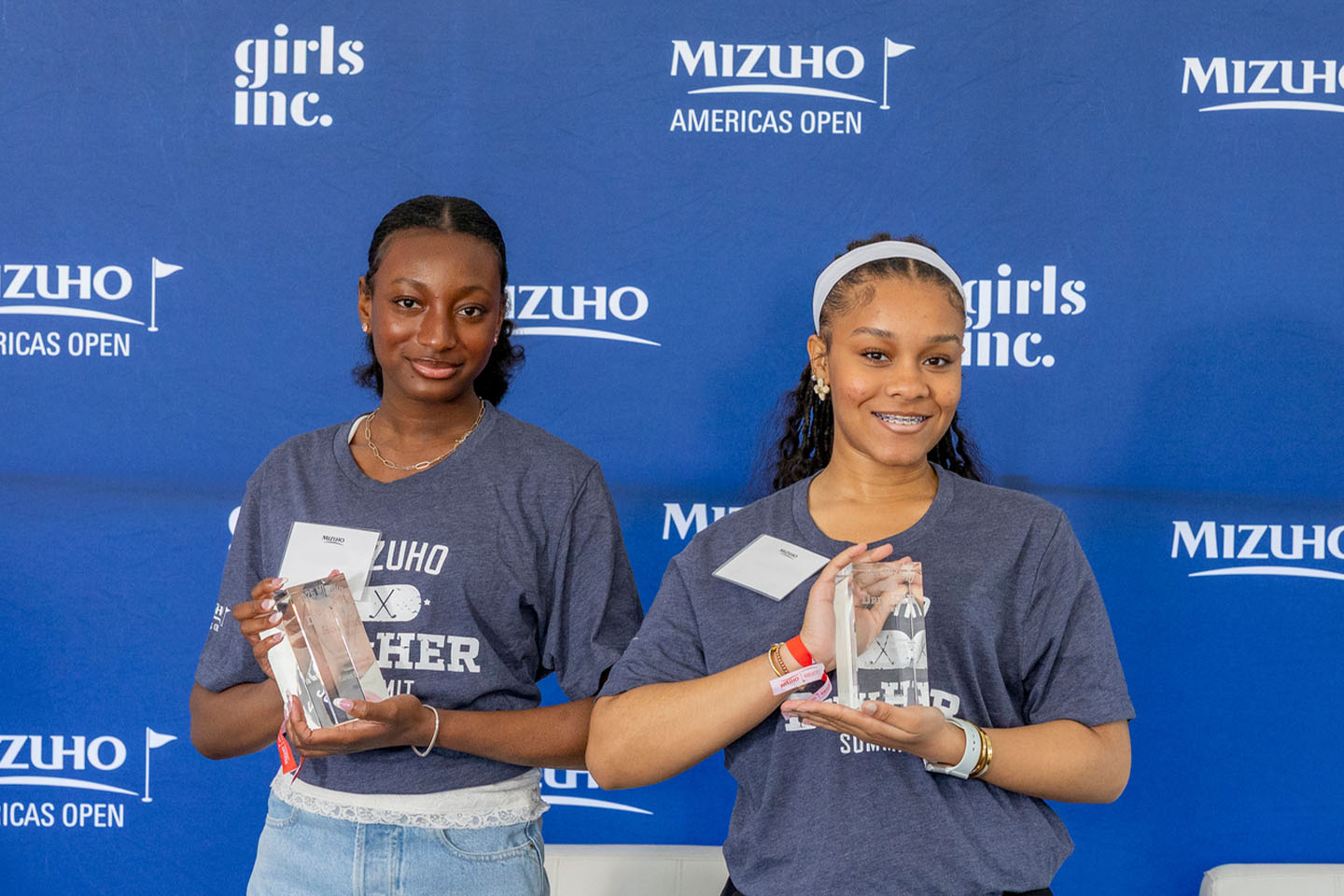
That momentum was the focus of Mizuho’s recent speaker series event, which brought together three generations of elite female golfers for a discussion on the surge in women’s sports. The panel featured LPGA icon Michelle Wie West, a U.S. Women’s Open champion and one of the most influential figures in the sport; Rose Zhang, one of the most accomplished amateur golfers in history and now a rising LPGA star; and Yana Wilson, a 19-year-old LPGA rookie representing the next wave of talent.
While each Mizuho brand ambassador brought a different perspective, their message was consistent: women’s sports are no longer an emerging story – they are a rapidly scaling ecosystem with meaningful implications for investors and brands.
A Market Gaining Momentum
As Wie West put it, it’s now clear that “women’s sports is good business.” But it’s not just that brands are investing more, it’s how they’re investing.
In recent years, sponsorship has evolved from passive support to active partnership. Rather than simply writing checks, investors are increasingly focused on deepening the partnership – and, in turn, the overall fan and player experience.
Panelists pointed to Mizuho’s decision to cover accommodations for players in the Mizuho Americas Open – the first domestic event on the schedule to do so – as a clear example of this approach in action. In addition to emphasizing visibility, tournament organizers asked a more fundamental question: how can the player experience be improved?
That mindset is beginning to take hold more broadly. Across the tour, similar investments – from upgraded facilities to enhanced travel and on-site support – are raising standards and reshaping expectations for what can be delivered.
The impact extends beyond individual tournaments. A better player experience leads to a stronger holistic experience – driving visibility, fan engagement, and commercial outcomes. Research indicates that sponsors can generate up to $7 in customer value for every $1 spent on women’s sports partnerships, highlighting the return potential when investment is aligned with experience and authenticity.
The goal isn’t just to stand apart, but to raise the bar across the sport. As one panelist noted of Mizuho’s philosophy, “we want to be the best event, but not the only good event – we want to elevate everyone.”
The Engagement Advantage
For much of its history, limited media coverage constrained the growth of women’s sports. Storytelling requires visibility, but visibility requires investment – a dynamic that, as Wie West described, has long been a “chicken and egg” problem.
That trend is beginning to shift. As corporate investment increases, so too does access – through expanded broadcast windows, greater media coverage, and more consistent exposure. The result is not just more visibility, but a stronger foundation for growth.
At the same time, social media has emerged as a powerful parallel channel for growth. In an era increasingly shaped by AI and algorithm-driven content, authenticity is becoming a defining factor in how fans choose what to engage with. As Wilson noted, giving fans a peek into athletes’ personalities – both on and off the course – has become a key driver of engagement.
That shift is especially powerful given the nature of the audience. Women’s sports fans tend to be younger, more engaged, and more responsive than traditional sports audiences. This delivers something brands increasingly covet: authentic, deeply connected audiences.
The impact is measurable. Women athletes drive roughly 2x the engagement on social media, while fans of women’s sports are twice as likely to purchase products endorsed by female athletes.
Redefining the Modern Athlete
At the center of this transformation are the athletes themselves, navigating a more dynamic and opportunity-rich landscape than ever before.
For Rose Zhang and Yana Wilson, the emergence of Name, Image, and Likeness (NIL) policies – which allow collegiate athletes to earn income through endorsements while still competing – has reshaped the early stages of their careers in very different ways.
Zhang embraced NIL while competing at Stanford, using the opportunity to better understand her brand and align with partners. At the same time, she made the deliberate decision to stay in school, balancing a full academic schedule with the demands of elite competition to build an identity beyond golf.
Wilson, by contrast, took a more direct path, turning professional out of high school. For her, early success – and the confidence that came with it – made the decision clear. But even then, navigating sponsorships, agents, and the expectations required unusual maturity at such an early stage.
Beyond the course, the panelists spoke about balancing competing priorities, from school and sport to family life. Wie West spoke candidly about the challenges of returning to competition while raising a young family, describing the constant trade-offs between professional ambition and time at home.
Taken together, these experiences reflect a broader redefinition of what it means to be a professional athlete. Success is no longer defined solely by performance, but by the ability to navigate multiple roles, make intentional decisions, and build a career on one’s own terms.
What Comes Next
The trajectory of women’s sports is clear – but far from complete. While investment, visibility, and engagement have all improved significantly, the full commercial potential of the space has yet to be realized.
At the same time, the foundation is firmly in place. The combination of institutional support, corporate investment, and athlete leadership is creating a durable growth model that is less dependent on short-term momentum and more aligned with long-term value.
As Wie West noted, the current moment feels less like a peak and more like “the base of the mountain” – with significant runway still ahead.