

For years, AI headlines have largely focused on the latest developments in advanced models and the capital required to fund frontier research. More recent discussions have centered on whether development needs to slow, lest these models threaten the future of human civilization. These lofty questions — and the trillions of dollars invested in answering them — are likely to play a prominent role in how AI reshapes multiple sectors of the US economy.
In the industrial sector, however, we believe the emergence of physical AI is already impacting operations on the factory floor, and this uptake shows few signs of slowing down.
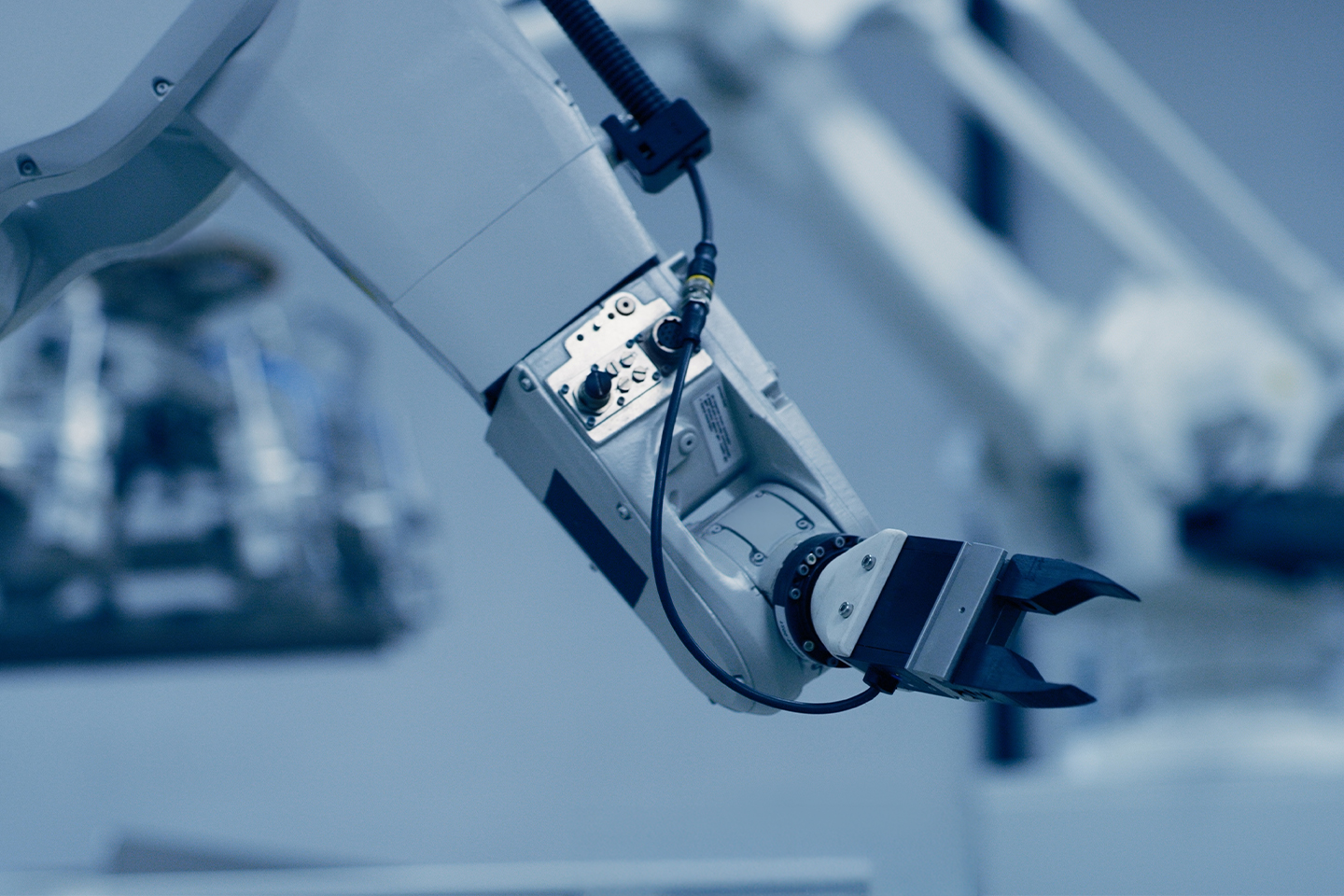
Physical AI, or intelligence embedded in machines that sense, reason, and act, has turned industrial facilities into an early proving ground for the efficacy of overhauling systems and processes in real time, to real effect.
“Unlike digital AI, which operates purely in digital environments, physical AI integrates advanced models with hardware and machines to interact with physical surroundings,” says Brett Linzey, Managing Director and Head of Industrials Research at Mizuho Americas.
Highly structured environments, with repeatable processes, defined workflows and measurable outcomes, make it easier to train, test, and scale physical AI. Most industrial equipment already uses sensors, chips, and software to communicate with other machines and a central management portal. This means many companies do not need to rebuild a factory from scratch to see the return from integrating AI technologies into these physical settings. Instead, they can layer intelligence onto robots, controls, valves, pumps, and other components that are already in production, delivering efficiency gains and cost savings on processes that may already be underway.
To some, the idea of “physical AI” may suggest humanoid robots operating and managing factories that are today run by humans. In our view, however, the most important early deployments of physical AI maybe less futuristic but more practical — AI-enabled inspections, predictive maintenance, and semi-structured material handling are likely to be among the earliest applications. In these instances, the safety stakes are often lower, redesign requirements are more modest and, importantly, the benefits are measurable.
“It always comes down to use case and return on investment. You need to have some identifiable and tangible payback,” said Linzey. With these physical AI applications offering line of sight into clear ROI, management teams have significantly increased discussion of their interest in, or use of, this technology.
Our data shows "physical AI" mentions on earnings calls and during industry events rising over 10x in a two-year period, to 975 in the first quarter of2026 from 92 in the first quarter of 2024. Capital is also flowing to the opportunity. Robotics and physical AI startups raised $16.3 billion across 492 deals in Q1 2026, the strongest quarter on record by both measures. Trailing 12-month deal value approached $40 billion, with physical AI emerging as a key private-market value pool going forward. Measured by the total value of the top 100 US private companies by category, physical AI and robotics was not even a category in 2016; 10 years later it reached $263 billion, second only to AI and software.
Two layers of opportunity
Physical AI creates two broad layers of potential opportunities for companies and investors, in our view.
The first is the automation layer. Companies that are already building and integrating the machines and systems that run industrial processes are poised to capture early benefits, both as system suppliers and as users of those same tools inside their own operations.
“We see early movers in the automation layer, specifically names with large installed bases, embedded software, and proprietary data best positioned to benefit first, while those with primarily commoditized hardware are more challenged,” Linzey says.
The second layer is the component supply chain, or “picks and shovels" for the physical AI buildout. As machines become more intelligent, they will need more advanced sensing, motion, control, and power capabilities. The hardware that supplies these capabilities inside systems includes the bearings, actuators, sensors, servomotors, drives, connectors, and thermal management, among other components.
For some companies that we believe will play a key role in meeting this demand, the physical AI opportunity is underappreciated today because it is often embedded in existing product lines. In our view, order books and capital-expenditure plans make the opportunity clear and suggest physical AI is becoming commercially viable before it fully matures.
An early-cycle story
Physical AI remains an early-cycle story and faces several challenges, including many in the popular AI conversation such as compute and power availability, grid interconnections, and supply-chain constraints, among others. We view these hurdles as generally manageable, however, and the investment opportunity remains strong.
As AI has moved from the digital realm to the real world, use cases have expanded across factories, warehouses, and logistics facilities. In our view, the most investable near-term lever is internal productivity, and we’ve already seen that physical AI does not need to arrive fully matured to create value.
As physical AI earns its place in the proving grounds of the industrial economy, we expect its utility and investment potential may only increase, providing a differentiated avenue into the larger AI story.


.avif)