

The artificial intelligence boom is transforming nearly every corner of the market, driving historic gains for some companies and reshaping the investment landscape. Yet the rally has been far from even.
Software – once the engine of tech growth – has struggled to keep pace. Year to date, chip and hardware stocks have outperformed software by nearly 30 percentage points, marking one of the widest gaps in recent memory. The prevailing narrative that “AI will eat software” is increasingly becoming conventional wisdom among investors.
But the market may be missing a bigger picture. While the hardware and infrastructure dynamic is undeniably powerful, software’s long-term importance and structural defensiveness are being somewhat overlooked. While select incumbent application software companies are largely being viewed as AI roadkill, these companies that build, deploy, and integrate software across enterprises and governments remain critical to organizations’ ability to operate smoothly and extract real value from AI. And while certain legacy models will undoubtedly face pressure, others are better positioned to benefit than the market currently expects.
For investors, the divergence in performance raises important questions: is software truly at risk, or is the market mispricing its potential? Which companies will emerge as winners – adapting their models and capturing new sources of value – and which will be left behind? And beyond the sector itself, how will AI reshape the broader economy, from productivity to employment?
How Dire is the AI Threat to Software?
While software has clearly taken a hit, a closer look reveals that the underperformance is far from uniform. Application software or software-as-a-service (SaaS) stocks, for example, have fallen by a median of about 28% since February, driven entirely by multiple contraction, with essentially no change to earnings expectations. Infrastructure software, on the other hand, has moved in the opposite direction – rising roughly 27% over the same timeframe, and with most of that coming from multiple expansion.
While SaaS has been under pressure due to perceived competitive threats, it’s increasingly clear that infrastructure software – the systems that enable AI compute, data flows, and secure workloads – are being appreciated as clear beneficiaries of the current AI wave.
The market’s pessimism toward SaaS, meanwhile, looks overdone for some of these companies. In our view, current valuations appear to underappreciate the enduring advantages of certain incumbents that have spent decades deeply embedding their solutions into enterprise workflows. These platforms are extremely difficult to replicate or replace. They benefit from powerful network effects, including vast installed customer bases, rich proprietary data sets, and proven governance frameworks that give them resilience even as technology shifts.
Claims that AI will quickly disintermediate multibillion-dollar enterprise vendors misjudge enterprise software buyers’ evolutionary nature (as opposed to revolutionary) and just how complex it is to build secure, compliant, enterprise-grade solutions. Even large and highly innovative AI-native challengers face some hurdles in winning trust at scale, even though we do expect progress over time. All that said, we believe smaller business markets may prove more vulnerable, as customers experiment with AI tools at a faster rate given less stringent scalability and security concerns.
Looking to the Future
The pace of AI advancement continues to accelerate at a highly impressive pace. OpenAI’s Sora 2, for example, has demonstrated stunning leaps in generative video, producing lifelike motion, coherent dialogue, and realistic physics in seconds. These advances illustrate just how quickly creative and cognitive boundaries are being rewritten.
The next major enterprise shift will come from AI agents – systems capable of operating autonomously across complex workflows. Anthropic’s Claude Code, built on Sonnet 4.5, has demonstrated the ability to operate autonomously for more than 30 hours, tackling complex, multi-step development workflows. While enterprise adoption remains early, pilot programs are expanding, and broader deployment will have far-reaching implications.
As these capabilities scale, pricing models are also evolving. Consumption-based structures – long dominant among hyperscalers – are spreading across software categories. SaaS vendors that still rely primarily on per-user licensing will increasingly transition toward hybrid models that tie pricing to usage and measurable value creation. The companies that move quickly and price intelligently will strengthen their competitive edge, while slower, more conservative players risk being left behind.
Select incumbent application software platforms, meanwhile, appear well positioned for continued healthy growth as agentic AI largely supplements the human labor force and thus increases technology’s share of budgets. Their scale, integration, and trusted relationships with global enterprises provide a foundation for layering in AI features at scale.
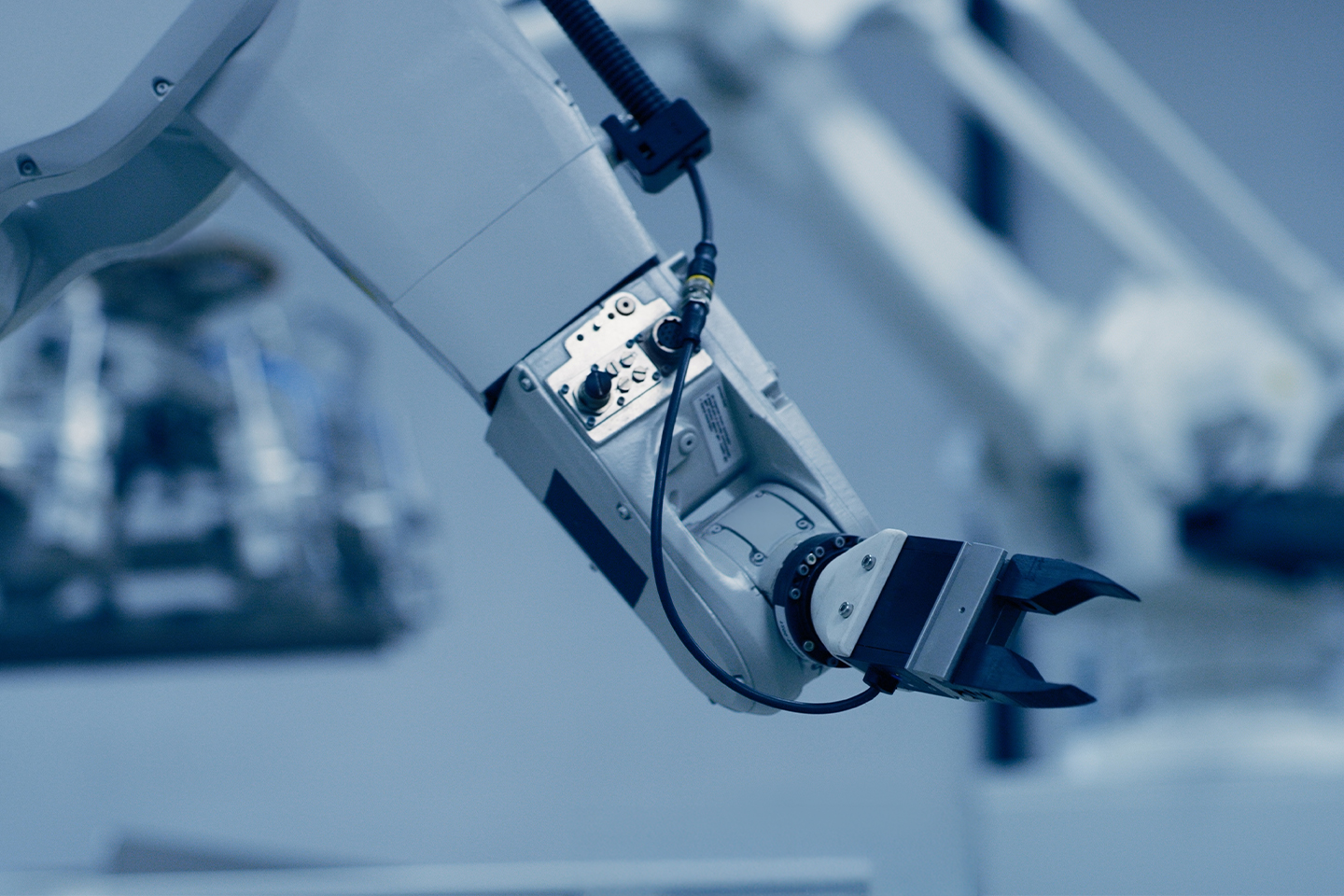
On a longer timeline, the line between software and hardware will continue to blur. Soon, the economy will enter an era of embodied AI, where intelligence is no longer confined to code or screens but is integrated directly into physical systems: robots, vehicles, sensors, and autonomous machines. The next frontier isn’t just software running on devices but software becoming the device – perceiving, deciding, and acting within it.
How Will This Impact the Economy?
The broader implications of AI adoption are still taking shape. Some experts, including Anthropic CEO Dario Amodei, warn that AI could displace a meaningful share of white-collar jobs, driving unemployment to new highs. Others foresee a different trajectory, one where automation boosts productivity, lowers costs, and creates new roles that offset the losses.
The truth is, it’s too early to tell. Agentic, copilot, and chatbot-based systems are still in their infancy, and most enterprises remain in pilot phases rather than anything approaching full-scale rollouts. While some organizations have used automation to streamline specific roles, there’s little evidence yet of widespread labor reductions directly tied to AI.
For now, humans remain firmly in the loop and will be for the foreseeable future. Oversight, governance, and strategic judgment still rely on human decision-making. Over time, however, more of this monitoring will shift toward software itself. The same software that manages servers, applications, and networks will autonomously handle enterprise tasks, bridging the gap between digital and operational intelligence.
The real inflection point will come when productivity gains begin to register in the data – when AI moves from experimentation to measurable output. That’s when we’ll start to see the first clear signals of how this technology is reshaping both corporate economics and the broader labor market.
The coming cycle will bring challenges: rising compute costs, power constraints, and new cybersecurity threats among them. Yet the opportunity remains vast. As agentic systems mature and embodied AI takes hold, software will again prove indispensable – not just as the layer that powers intelligence, but as the connective tissue linking the digital and physical worlds.