Message from the CSuO
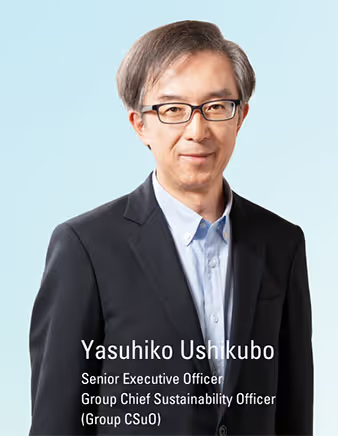
Realizing a sustainable society and economy presents a range of challenges, including responses to climate change, conservation of natural capital, development of a circular economy, and respect for human rights. Mizuho has steadily built up its initiatives in these regards, aiming to contribute to sustainable growth worldwide.
Among the most important challenges we are addressing are responses to climate change. Aiming to contribute to achieving net zero by 2050, we have established a Net Zero Transition Plan and are taking an integrated approach to facilitating transition in the real economy, capturing business opportunities, and managing risk. To achieve net zero greenhouse gas (GHG) emissions through financing and investment, we increased the sectors for which we set medium-term GHG emissions reduction targets and we are engaging with clients on these targets. At the same time, we are bolstering our risk management framework to enable us to gain an accurate understanding of client progress on transition risk responses and assist them as required.
The transition to a decarbonized society is also an opportunity to enhance the competitiveness of Japan's industry by supporting our clients' structural transformation and practical application of next-generation technologies. Having set a sustainable finance target of JPY 100 trillion to provide funding needed for transition, we are providing risk capital for groundbreaking business sectors.
Our implementation of these initiatives is underpinned by collaboration with a wide range of stakeholders and each employee's high level of knowledge and awareness regarding our course of action. We are focusing on capability building by engaging in dialogue with employees in branches, offices, and other workplaces.
We will proactively innovate together with our clients and stakeholders for a prosperous and sustainable future, as stated in our Purpose.
Discussion: The need for sustainability
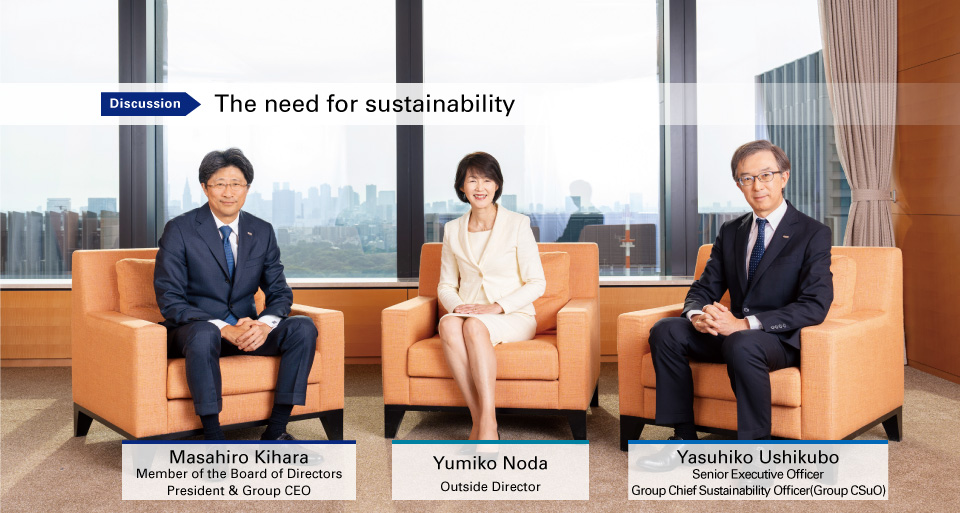
Group CEO Masahiro Kihara, Group CSuO Yasuhiko Ushikubo, and Outside Director Yumiko Noda sat down together to discuss the global need for sustainability, sharing their views on current debates and initiatives as well as future challenges. (May 2024)
Recent trends in sustainability

The topic for today is sustainability. As it is quite a broad concept, I would like to break it up into three subtopics: management, business, and take-up by employees and the organization. We'll start with management. What challenges do you see in the existing state of affairs for sustainability, given the conversations you've had at various opportunities and your own experience?

At the Japan Business Federation, where I serve as one of the vice chairs, we have put forward a policy of practicing sustainable capitalism. We see sustainability as a central theme of corporate management and are pursuing it as such. I believe three points are key when it comes to sustainability. The first goes almost without saying: environmental conservation. Right now, the earth's environment is in crisis. There is a pressing need for us to accelerate actual innovation towards green transformation and a circular economy. The second is sustainability in society. Corporations should have a social viewpoint and contribute to the development of a fair and equitable society. They should balance doing business with contributing to the betterment of society by investing in people and fulfilling their responsibilities in relation to supply chains and subcontractors. The third is the complexity of the concept of sustainability. Determining what counts as sustainable is no easy task. For example, green transformation demands renewable energy and a shift to electric vehicles, but these may lead to increases in geopolitical risk surrounding rare earth minerals and loss of biodiversity. It is also necessary to think about impacts on society in areas such as local employment. Corporate executives have to confront these innumerable, intractable contradictions and still make progress. It is a considerable challenge.

When I attended the annual meeting of the World Economic Forum at Davos in January 2024, I also felt that more people were beginning to see sustainability as a difficult task. As you said, the dimensions of sustainability have been multiplying. Sustainability topics have already extended from the environment and climate change to the circular economy, human capital, and human rights. With populations aging, birth rates declining, and lifespans lengthening, health has also joined the list. What's more, Japan may be looking at more severe disparity due to inflation. In the face of these sustainability challenges, under our Purpose of "Proactively innovate together with our clients for a prosperous and sustainable future", Mizuho has committed in our current medium-term business plan to creating both corporate value and social value. However, it is very tough.
I think that is why the spirit of the Purpose is so critical.
If we are to be a company that contributes to society, we must first challenge ourselves to become a sustainable company. In other words, we need to have a sound sustainability management structure in place. For human capital, we need to be accepting of people who have grown at Mizuho and then leave Mizuho to pursue other opportunities. For human rights, we need to stay on top of due diligence. For a circular economy, we need to take even greater action.
From the perspective of Mizuho's own management, I think it is important that we fulfill our role as a financial institution by providing risk capital for the transition to net zero. As the process will vary from country to country, we will meticulously respond to the needs of society and clients according to the situation in each location, contributing to resolving social issues while connecting stakeholders. Concurrently, we have to remain attentive to transition risks. We need to think about two axes: whether or not a particular sector has high carbon emissions and whether or not the client has the intention and planning to decarbonize their business. Disclosures are another important aspect. Global standards for sustainability disclosures are still in process and rules for Japan are still under discussion, too. We are preparing to comply with these, but it is not enough to simply follow the regulations. Communicating effectively through disclosures so as to deepen our stakeholders' understanding is also essential.
Sustainability business strategy to differentiate Mizuho
Supporting clients' decarbonization is very important. Corporate management is often wandering around without a compass. The key point is whether or not Mizuho can get close to them and innovate together with them. The 20th century economy was a mass production, mass consumption, mass disposal economy. Turning it into a circular economy will require transforming the entire value chain—design, manufacturing, consumption, collection, and renewal. You could call this a revolution. The younger generation in Europe has taken notice of the fact that human activity is already crossing the so-called "planetary boundaries", beyond which we may cause irreversible changes to the earth's systems. In 2023, I met with the European Commission's Environment Commissioner, who was 33 at the time, in Brussels. He said that transitioning to a circular economy is a matter of course—that there is absolutely no choice not to do it. To make it happen, it will be necessary to bring together a range of stakeholders. I expect that Mizuho, being a linchpin of industrial finance in Japan, will be able to connect a wide range of related stakeholders.
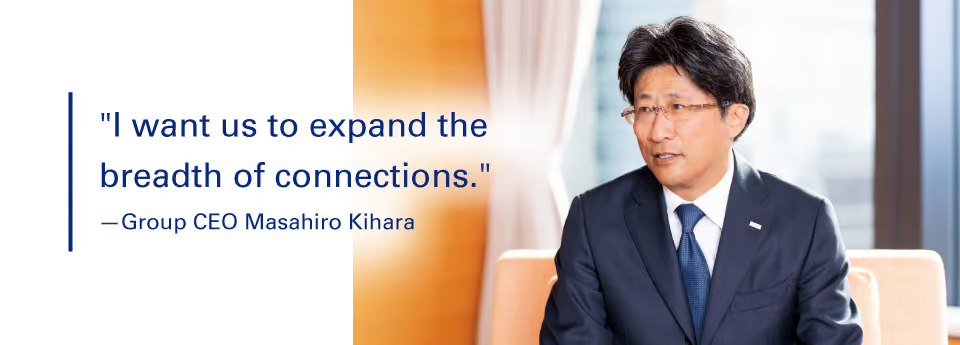
We will not be able to break with the past if we do not connect a variety of stakeholders. The Corporate & Investment Banking Company, our in-house company in charge of large corporate clients, has a Value Co-creation Team. Most of the members of this team have financial backgrounds, and some joined us from different sectors, such as Japanese trading companies. We are not only discussing and investing in creative business ideas with our clients but also constructing creative business platforms with them. For example, along with another Japanese company, we invested in an India-focused startup that has the technology to produce alternative fuel from landfill garbage. The technology alone will not be enough; it will be necessary to also have plants that can apply the technology. In that way, growth in business leads to growth in demand for financing, which in turn leads to growth in our finance business. Also, in constructing new value chains for business, I want us to expand the breadth of connections, beyond large companies to middle-market firms and SMEs. Changing the whole industrial structure is no small task. We need to come up with comprehensive designs for industries. We can't be so full of ourselves as to think we can do it alone. We want to and need to talk with a wide range of stakeholders and create such comprehensive designs together.
That is really one of Mizuho's strengths and something I would like you to try to do. I used to work at a bank myself, and I know bankers tend to decide whether or not the bank will lend to a borrower just by looking at the borrower's financial statements. Going forward, banks should take a more proactive role, enhancing their broad connections with clients and utilizing talent from a diversity of backgrounds.
I think the new shape of banking will be to look not only at a borrower's financial statements but at their growth potential. The Japanese government's Green Transformation Implementation Council is seriously discussing the state of industry and their vision for 2040. I am considering what can be done to connect industry, government, and academia together and what Mizuho can do there.
One of our actions in fiscal 2023 was to formulate a sustainable business strategy, which was also discussed at the Board of Directors. We are trying to imagine a future in which society has achieved carbon neutrality, a circular economy, and so on, and we have to think about what Mizuho's strengths can contribute and what our aims should be, in both a short-term and medium- to long-term time frame. Mizuho's culture of emphasizing research is an important characteristic here, I think. Also, in terms of support in the short term, finance is key. Our sustainable finance target of JPY 100 trillion by 2030 shows our commitment. In fiscal 2023, we released our Human Capital-based Management Impact Finance product in Japan, which comes with an impact assessment by the consulting division of Mizuho Research & Technologies*. We've already had 10 Japanese companies sign up for it and had interest from many more. The concept of impact is an effective way to align the vectors of social contribution and corporate value. Over the medium to long term, as Group CEO Kihara said, our investment activities will be important. We have our Value Co-creation Investment Facility for the later stage and Transition Equity Investment Facility for the early stage. For hydrogen, we have announced that we will provide JPY 2 trillion in financing by 2030. Providing risk capital is one of the functions finance institutions are performing to support the Japanese government's initiatives. About the connecting aspect, we want to connect large corporations with middle-market firms, SMEs, and less urban areas in Japan, and to connect middle-market firms and SMEs that have promising technology with large corporations. Sustainability has a lot of areas for collaboration, even with competitors. I believe Mizuho might be able to convince our clients to join hands with their competitors.
*Mizuho Research & Technologies merged with Mizuho Bank in April 2026.
On the flip side, what are Mizuho's challenges in terms of sustainability?
One of our challenges is our global reach. We need to gather information from Europe, which is ahead on rulemaking for sustainability, and introduce Japan to the innovations that are advancing in other parts of the world. We want to strengthen our capacity here. Raising our literacy and sensitivity around global sustainability developments is a must. Part of this is sending our employees from Japan to our offices elsewhere so that they can assist local employees in identifying implications for Japan.
There is a lot to do, but the highest priority is, as you implied, Mizuho's determination. We are living in a time with no easy answers, and moving forward without stopping requires both determination and courage. I heard Group CEO Kihara talked with Paul Polman, the former CEO of Unilever, recently. He has been continually advocating for sustainability for over 20 years and unwaveringly promoted Unilever's sustainability management. Mizuho should be a financial institution supporting companies that have such determination and courage.
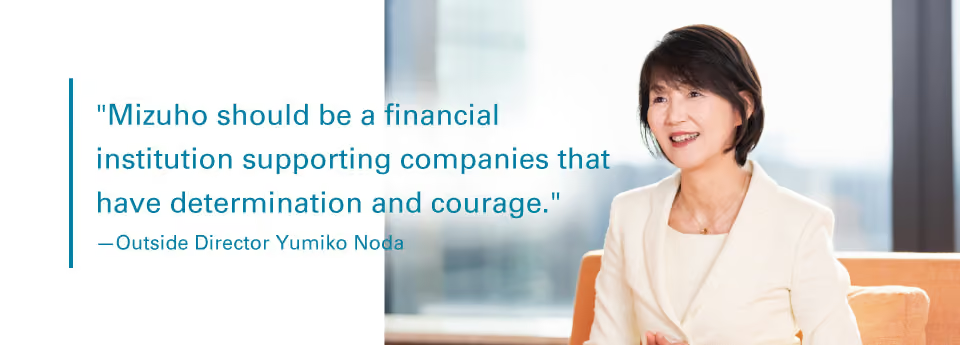
Before I talked with Paul Polman, I read his book Net Positive. His stance was not to quit the hard things, because those are the ones that are most worth doing. I believe finance can give that sort of push to companies producing innovation. That's in line with the thinking of Eiichi Shibusawa, who founded one of our predecessor banks, First National Bank, along with many other companies. At the time, Japan didn't have any of the industries or companies that the US and Europe did. No one could have known for sure if those sorts of industries and companies would be successful in Japan. But that is exactly why Shibusawa supported them. That is the role of finance.
Sustainability mindset among employees
It takes more than just a few members of the organization to make innovation happen. Do you have any advice, from your experience in corporate management, for promoting awareness of sustainability among employees throughout the organization?
My company is like Mizuho in that it does business all over Japan, employing nearly 10,000 people. Getting every employee in every region to adopt your corporate Purpose and a sustainability mindset is very ambitious. What I think is important is that each leader, from executive management to the heads of business lines to general managers on down, talks about the Purpose in their own words. It is also important that employees consider what the Purpose and sustainability mean in the context of their own work.
I agree that sending messages across the various layers of the organization is important. In fiscal 2023, as Group Chief Sustainability Officer, I held about 30 dialogues with employees, mainly employees in frontline offices who have contact with clients every day. I was surprised to find that early career employees in their first or second years would tell me Mizuho could still do a lot more for sustainability or they hadn't been able to propose a solution for their client's sustainability needs and wanted to do better next time. I could see that the younger generation's interest in sustainability was far beyond my original understanding. In fiscal 2024, we are going to launch an employee-led working group that will call for and implement ideas to foster a sustainability mindset throughout Mizuho and provide solutions to our clients. It won't just be for the relationship managers of large corporate clients in related sectors or for the departments that handle large-scale project finance or for the departments that make policy proposals. It will be for every employee to take ownership of sustainability themselves. That will lead to specific plans and to uncovering sustainability needs that even our clients haven't realized yet
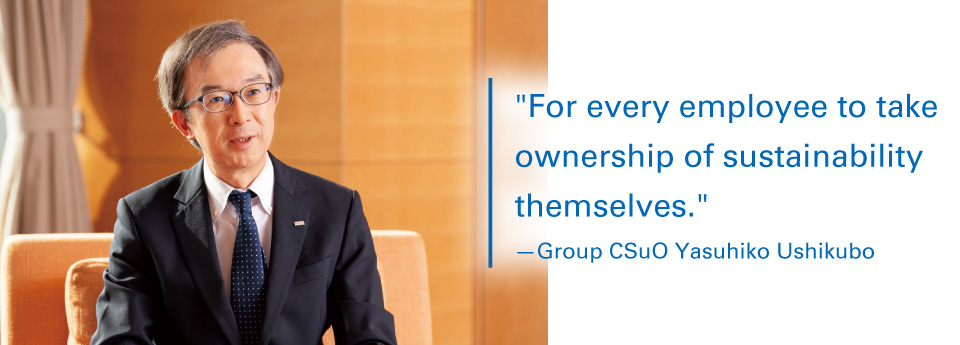
We had one case of providing financing to a startup dealing in semiconductor-related materials that can reduce energy consumption in semiconductor manufacturing, where such consumption is quite large. We rewarded this deal internally as a good example of completing a deal even in the face of many challenges, but it is also a positive example of us taking on sustainability. I think it is important for employees to understand when they have done something that contributes to sustainability so that they can communicate it as well.
It would be great if employees could take notice when their own work has contributed to sustainability, even if only in a small way. I look forward to talking more in the future about what Mizuho can do as a financial institution to contribute to a sustainable society and economy. I will be supporting Mizuho's innovations from my standpoint as an outside director.
Thank you for your time today.
Our Approach
Basic Concept
After deliberation at the Executive Management Committee and the Board of Directors, Mizuho Financial Group (our holding company) established a Basic Policy on Sustainability Initiatives to define our basic approach and methods for advancing sustainability initiatives. Our group companies have adopted the same policy.
The policy sets forth our definition of sustainability and our basic approach for sustainability initiatives as below.
Sustainability for Mizuho
Mizuho's sustainable and steady growth, environmental conservation and the sustainable development and prosperity of the economy, industry, and society both in Japan and around the world.
Basic Approach
By addressing materiality areas from a long–term perspective, we will seek to create value for various stakeholders and work to improve our own corporate value through the sustainable and steady growth of the company. This in turn will contribute to environmental conservation and the sustainable development and prosperity of the economy, industry, and society both in Japan and around the world.
We will implement sustainability initiatives based on the following approaches.
- In regards to the economy, industry, society, and environment, Mizuho will endeavor to increase our positive impacts and decrease our negative impacts, both direct and indirect.
- Mizuho, as a financial group, will especially focus on indirect impacts we generate through provision of financial and other services and through engagement with clients. We will provide our clients with multi–faceted support for initiatives addressing the Sustainable Development Goals (SDGs) and environmental, social, and governance (ESG) concerns.
- In the event of a conflict of interest or differences of opinions among stakeholders in regards to impacts and the timeframe for implementation, we will make a comprehensive decision by taking into account the circumstances or situation as well as international frameworks, agreements, or consensus and employing a long–term perspective.
Corporate Identity and Code of Conduct
At Mizuho Financial Group, Mizuho's Corporate Identity has been formulated as the concept that forms the basis of all activities conducted as Mizuho.
The Mizuho Code of Conduct is positioned as the rules to be complied with when implementing Mizuho's Corporate Identity, and serves as the foundation for the various decisions made in terms of business administration and operations.
Materiality
Significance of materiality areas
Efforts Related to the Sustainable Development Goals
How we define materiality areas
Areas that include medium-to long-term priority issues for the sustainable growth and development of Mizuho, our clients, our employees, the economy, society, and other stakeholders
Significance of materiality areas
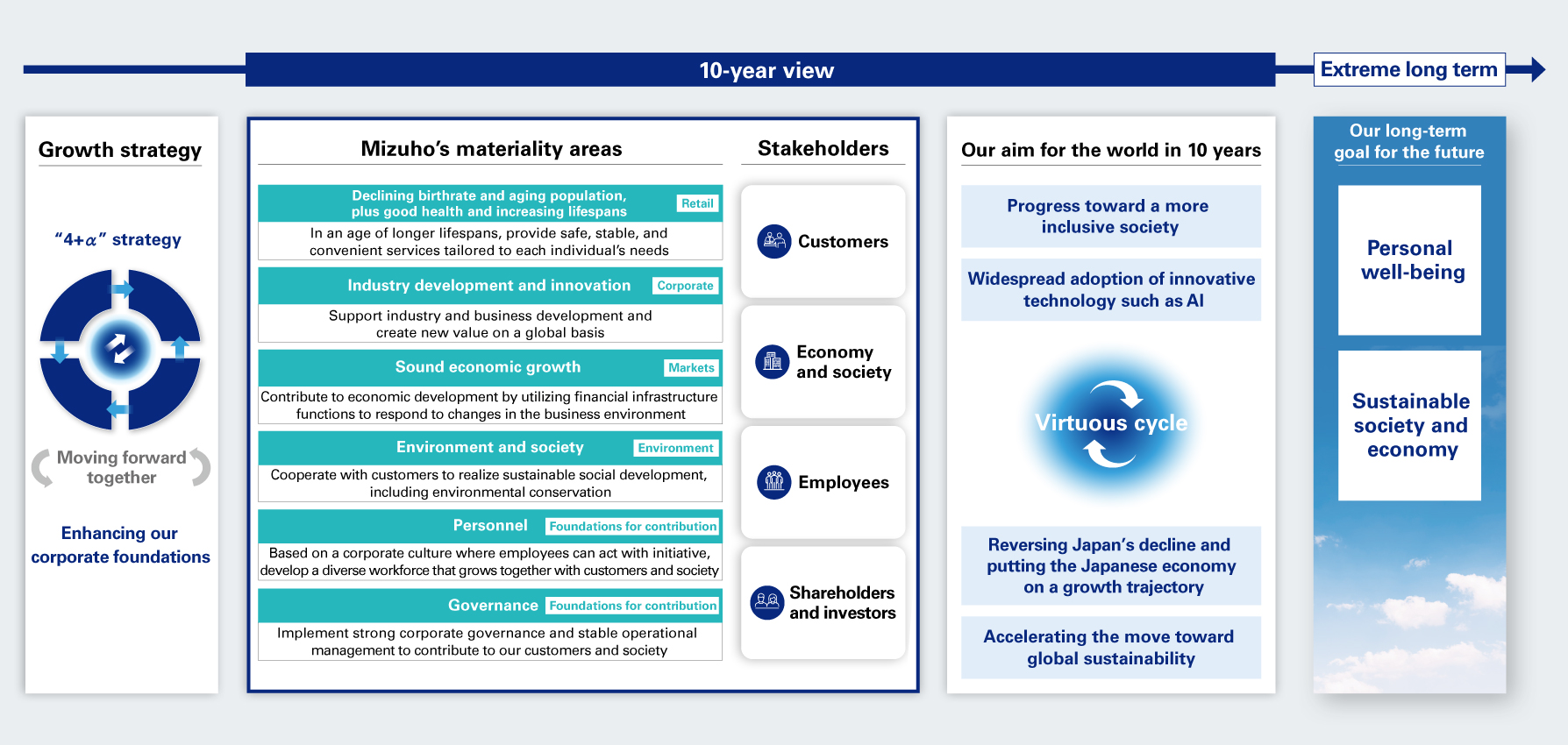
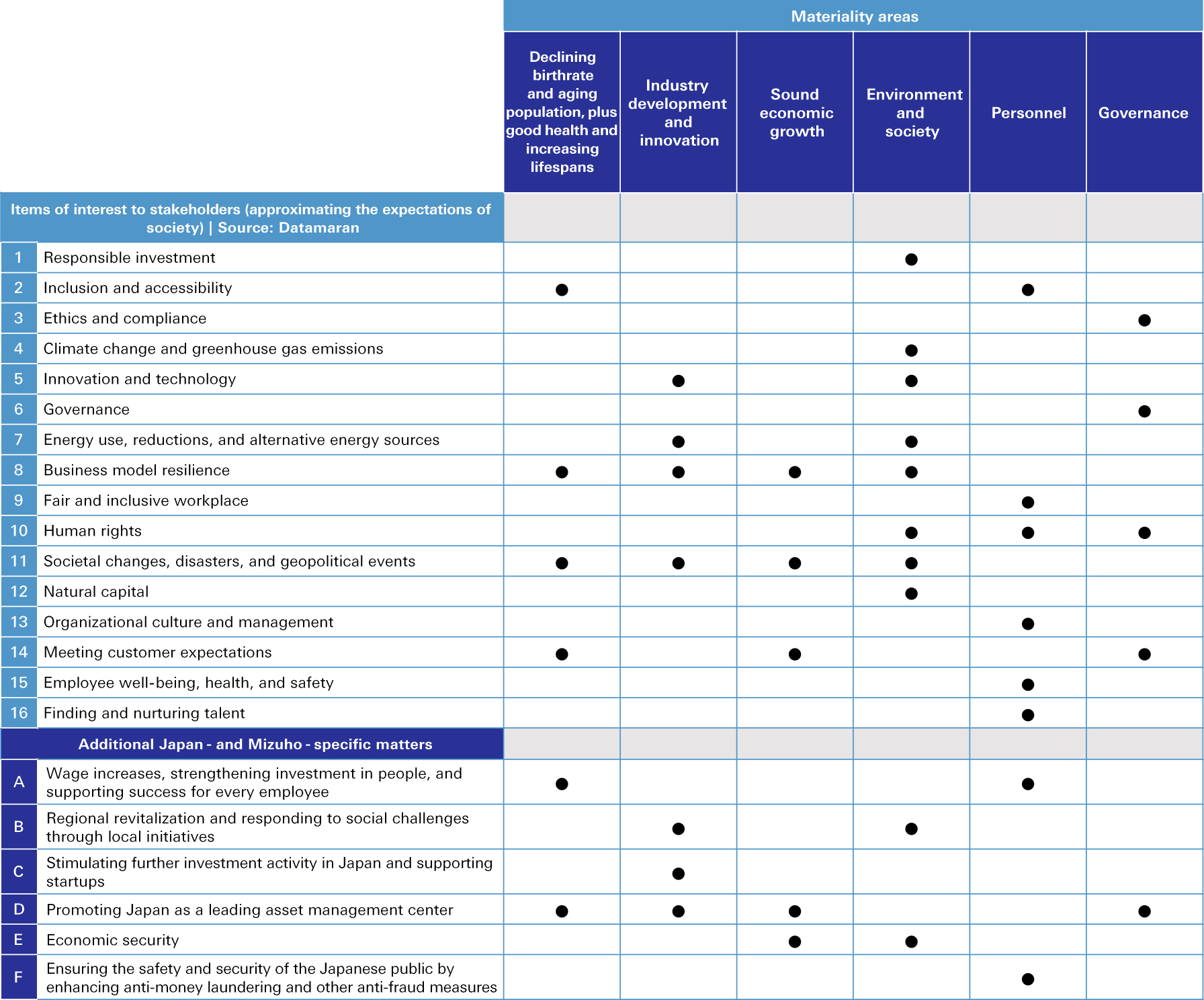
At Mizuho, we treat sustainability as inseparable from corporate strategy, and we determine materiality based on the expectations of society (the expectations stakeholders have about Mizuho’s impact on society) and importance to Mizuho (medium- to long-term impact on our corporate value and compatibility with Mizuho’s strategies and business areas).
Backcasting from our long-term vision for the future, we have defined our aim for the world in 10 years and derived our growth strategy and materiality areas from the associated key themes. The growth strategy and materiality areas are interconnected, with the 10-year horizon serving as a nexus.
Risks and opportunities and main initiatives
Materiality areas
Risks and opportunities
(reasons for selecting materiality areas)
Main initiatives
Declining birthrate and aging population, plus good health and increasing lifespans
Industry development and innovation
Sound economic growth
Environment and society
Personnel
Governance
- Demographic changes such as the declining birthrate and aging population imply potentially detrimental changes to our retail customer base, which is the foundation of our business.
- By providing retail asset formation, management, and succession and improving customer experience, we will have an opportunity to address social issues and enhance our corporate value through our business expansion.
- Any delay to changes in industrial and business structure poses a risk of damaging the sustainability of our corporate client base and of society overall.
- By anticipating changes and contributing to the sustainable development of our clients and society, we will have an opportunity to address social issues and demonstrate a competitive advantage in an evolving environment.
- Changes in the economic and financial market environment affect our business operations.
- By contributing to sound economic growth and playing a role in that process, Mizuho can both directly secure business opportunities and indirectly contribute to a more stable business environment.
- Our sustainability relies completely on the sustainability of society, including the economy and the environment, which are the foundation for our business operations.
- Supporting the realization of environmental and social sustainability may itself prove to be a business opportunity for Mizuho.
- Lack of human capital is a risk to Mizuho's business continuity.
- Creating a corporate culture that encourages a variety of people to act on their own initiative and grow will provide opportunities to create social value and enhance Mizuho’s corporate value.
- Administrative penalties and damage to social credibility due to poor governance are risks to our sustainability, business continuity, and strategy implementation.
- Stable business operations underpinned by strong corporate governance are the cornerstone of our growth strategy, corporate foundations, and everything else at Mizuho.
- Enhance quality of both in-person and digital customer touchpoints and raise value of customer experience
- Holistic asset advisory services for retail wealth formation, management, and succession
- Co-create new value by organically interconnecting a range of companies and opportunities
- Strengthen our presence in global financial and capital markets and link Japan to the rest of the world
- Provide solutions and financing centered on sustainability and support industrial and business structure transformation
- Improve alignment between business strategy and human resources strategy
- Strengthen operational resilience, cybersecurity measures, anti-money laundering / combating the financing of terrorism measures, and global governance
Annual review process
When designating "Materiality" at Mizuho, we consider the expectations of society and importance for Mizuho.
The Executive Management Committee and the Board of Directors review the need for changes in our materiality areas on an annual basis.
Organizational Framework
For important sustainability-related matters, we ensure supervision by the Board of Directors and Risk Committee following discussions at the business execution line, e.g., the Sustainability Promotion Committee and Executive Management Committee. Constructive discussions are held with outside directors who have experience and expertise in sustainability, as well as with external experts in attendance at Risk Committee and Sustainability Promotion Committee meetings. The resulting feedback is used in establishing policy and promoting our initiatives.
At Mizuho, responsibility for strategy planning and promotion concerning sustainability lies with the Group Chief Sustainability Officer (Group CSuO),who promotes sustainability initiatives throughout the Mizuho group and directly reports to the Group CEO. We have also built a system for conducting centralized sustainability-related risk management under the direction of the Group Chief Risk Officer (Group CRO).
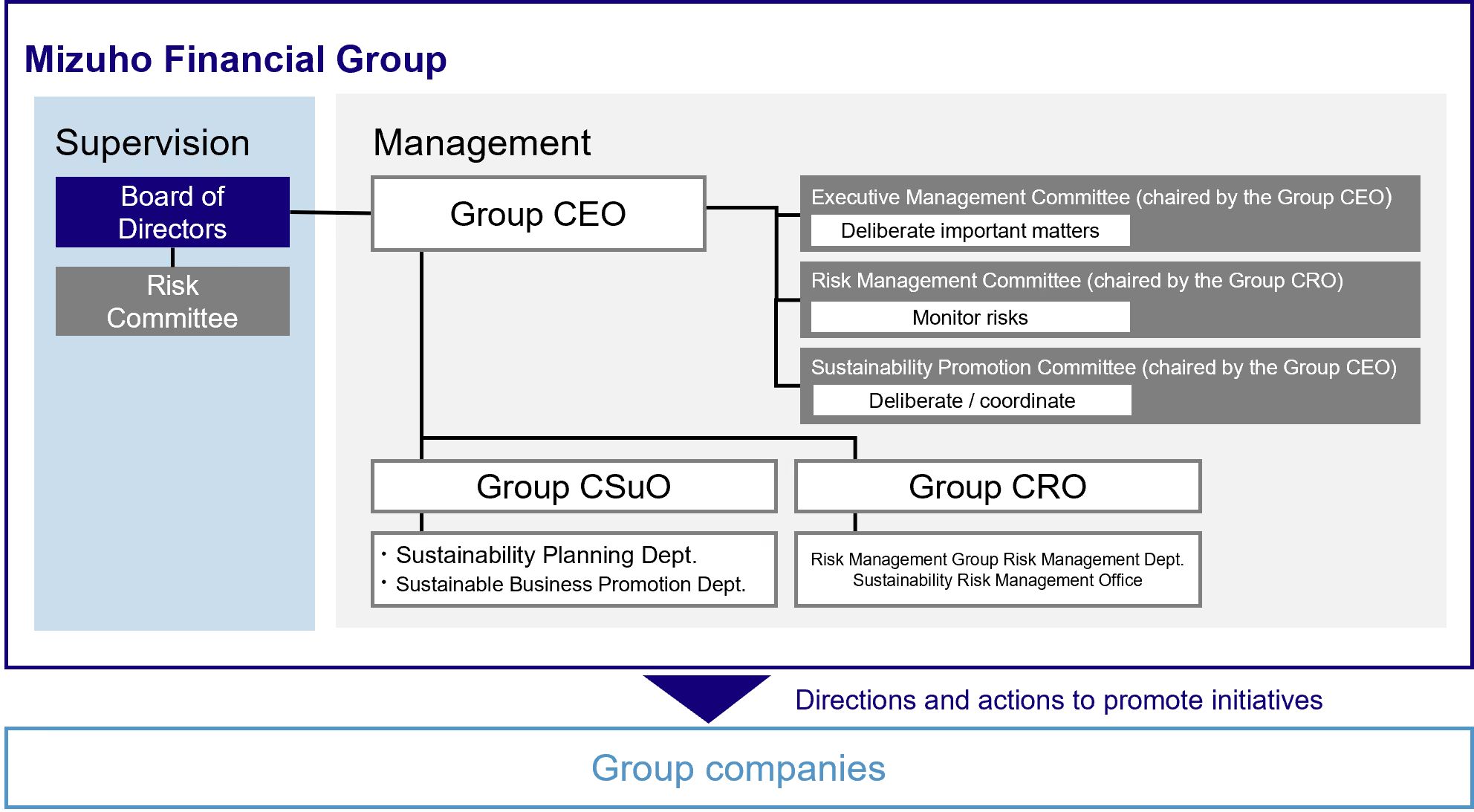
Board of Directors: Approves the basic matters relating to sustainability in the Mizuho group
President & Group CEO: Oversees sustainability initiatives.
Risk Management Committee:Deliberates on and coordinates and reports on risk management
Sustainability Promotion Committee: Deliberates on and coordinates sustainability matters
Group CSuO: In charge of planning and promotion of sustainability initiatives. As necessary reports to the Board of Directors, the Audit Committee, the Executive Management Committee, and the President & CEO on the status of sustainability initiatives, and related matters.
Group CRO: planning and operation of risk management
Sustainable Business Promotion Department: Focuses on sustainable business planning
Sustainability Planning Department: Focuses on policy establishment for entire Mizuho group
Risk Management Department Sustainability Risk Management Office:Manages sustainability risk
Overview of the Sustainability Promotion Committee (business execution line) (established in 2022)
Reason for establishment
Discuss and coordinate sustainability–related matters based on external experts’ advice towards further promoting sustainability across the group
Reason for establishment
Chairman
- President & Group CEO
Members
- Group CSO, Group CRO, Group CFO, Group CSuO, other executive officers (including those from Mizuho group companies), depending on content
External experts
- External experts are invited in line with the topics of discussion
–Meeting no. 1: Masako Konishi (Expert Director (Conservation and Energy), WWF Japan)
–Meeting no. 4, 20: Ashleigh Owens (Financial Institutions Lead, Shift)
–Meeting no. 14: Hirotaka Hideshima (Counsellor on Global Strategy to President, Norinchukin Bank / the Board of Directors member of the Taskforce on Nature-related Financial Disclosures (TNFD))
Meetings (topics discussed)
FY2024 (10 meetings in total)
Meeting no.19
- Concept and direction of engagement
- Visualization of performance against sector-specific medium-term targets for Scope 3 (financed GHG emissions)
Meeting no.20
- Initiatives to promote respect for human rights
Meeting no.21
- Revision of Scope 3 targets
- Engagement strategy
- Review of definition and utilization of Status of Transition Risk Responses
Meeting no.22
- Compliance with sustainability information disclosure regulation
- Advanced climate risk management
Meeting no.23
- Further promotion of sustainable business strategy
Meeting no.24
- Review of the Human Rights Issues Map
- Policy and disclosure on carbon-related exposure control for FY2025
Meeting no.25
- Initiatives pertaining to natural capital and circular economy
- Engagement with sectors covered by Scope 3 targets and grand design
Meeting no.26
- Revision of the Environmental and Social Management Policy for Financing and Investment Activity
- Perceived new operational direction of carbon-related exposure control for FY2026 and beyond
Meeting no.27
- Progress and future actions on the Net Zero Transition Plan
Meeting no.28
- Response to the recommendations of the participatory working group in the Mizuho Group-wide SX Project
- Disclosure of sustainability progress
Sustainability Promotion Measures
Mizuho is taking steps to promote understanding of and popularize sustainability group–wide by offering training programs, award programs, in–house communication tools, study sessions, lectures, and other learning opportunities across group companies and divisions.
Sustainability training sessions for all employees
Dates
Themes
Participants
FY2024
FY2023
FY2022
FY2021
- External Environment
- Mizuho's Initiatives
- Sustainability Action
- External Environment
- Mizuho's Initiatives
- Sustainability Action
- External Environment
- Mizuho's Initiatives
- Changes in the external environment about climate change and human rights
- Mizuho's strengthening of sustainability initiatives
All Mizuho employees in and outside Japan
Study sessions and lectures about individual themes related to sustainability
Dates
Themes
Participants
FY2024
Mizuho Diversity& Inclusion Month (M-DIM)
- Sustainable fashion
- Food Loss
Approx. 500 in Japan
FY2023
Mizuho Diversity& Inclusion Month (M-DIM)
- Parents and Kids — Let’s Think about the Wonder of Living Creatures (Biodiversity)
Executive dialogue
- Dialogue with Kihara Group CEO and Paul Polman, former CEO of Unilever and a leading expert on sustainability management
Approx. 300 in Japan
Approx. 480, both in and outside Japan
FY2022
Mizuho Diversity& Inclusion Month (M-DIM)
- Extreme weather events and biodiversity: What's happening? What can we do?
Approx. 250 in Japan
FY2021
Mizuho Diversity& Inclusion Month (M-DIM)
- l Making sustainability a core part of Mizuho's brand
- To be a social intorepreneur
Our approach to tax matters and Mizuho group's tax operation management
ESG and Sustainable Financing
Approx. 570 in Japan
Approx. 26,000, both in and outside Japan
Approx. 300 outside Japan
Please click here for more information about internal communication and employee-driven initiatives.
Raising employee awareness and consolidating their capabilities
Please click here for more information about trainings and awareness for strengthening support for sustainable businesses.
Strengthening support for sustainable businesses
Please click here for more information about trainings and awareness for human rights education.
International Agreements
We participate in a variety of initiatives both in and outside Japan, from a global perspective and while taking into consideration our role as a financial institution, in an effort to promote activities aimed at forming a sustainable society.
UNEP Finance Initiative (UNEP FI)
Principles for Responsible Banking
Principles for Financial Action towards a Sustainable Society
Sustainability Data Standardization Consortium
Principles for Responsible Investment (PRI)
Partnership for Carbon Accounting Financials (PCAF)
Taskforce on Nature-related Financial Disclosures (TNFD) Forum
Keidanren Initiative for Biodiversity Conservation
Cross Sector Biodiversity Initiative (CSBI)
Business call to action: Land and Sea, a Vital Connection for a Thriving and Resilient Economy
Net Zero Asset Managers initiative
The Human Capital Management Consortium
Japan Center for Engagement and Remedy on Business and Human Rights (JaCER)
United Nations Global Compact

The United Nations Global Compact came into existence in July 2000 with the endorsement of Kofi Annan, who was then the UN's Secretary-General. Through ten principles addressing matters like human rights, labor, the environment, and anti–corruption, the UN Global Compact encourages companies and other organizations throughout the world to support and act in ways consistent with the ten principles. Mizuho signed on as a supporter of the UN Global Compact in 2006.
By participating in activities such as the SDG- and ESG-related working groups of the Global Compact Network Japan (a local network promoting the UN Global Compact in Japan), we are sharing information and views on the advancement of sustainability initiatives.
The Ten Principles of the United Nations Global Compact
Human Rights
Principle 1: Businesses should support and respect the protection of internationally proclaimed human rights; and
Principle 2: make sure that they are not complicit in human rights abuses.
Labour
Principle 3: Businesses should uphold the freedom of association and the effective recognition of the right to collective bargaining;
Principle 4: the elimination of all forms of forced and compulsory labour;
Principle 5: the effective abolition of child labour; and
Principle 6: the elimination of discrimination in respect of employment and occupation.
Environment
Principle 7: Businesses should support a precautionary approach to environmental challenges;
Principle 8: undertake initiatives to promote greater environmental responsibility; and
Principle 9: encourage the development and diffusion of environmentally friendly technologies.
Anti–Corruption
Principle 10: Businesses should work against corruption in all its forms, including extortion and bribery.
Sustainable Development Goals (SDGs)
UNEP Finance Initiative (UNEP FI)
The United Nations Environment Programme Finance Initiative (UNEP FI) is an international partnership of financial institutions that strives to identify, disseminate, and promote the best environmental and sustainable practices in the various operations in which financial institutions are involved. Mizuho became a signatory to the UNEP FI in 2006.
Principles for Responsible Banking
The Principles for Responsible Banking are a framework aiming for the sustainable development of banks and society in alignment with the objectives of the Sustainable Development Goals (SDGs) and the Paris Agreement. The Principles enable banks to identify where they have the potential to make the most significant positive and negative impacts, and provide a framework for banks to set and work towards strategies and targets in line with initiatives in these identified areas, and to be transparent in their disclosures.
Mizuho signed the Principles for Responsible Banking when they were launched in September 2019.
Mizuho signs Principles for Responsible Banking (PDF/54KB)
Update on the implementation of the Principles for Responsible Banking (September 2025) (PDF/155KB)
Principles for Financial Action towards a Sustainable Society (Principles for Financial Action for the 21st Century)

In 2010, the Expert Committee on Environment and Finance of the General Policy Committee of the Japan Ministry of the Environment Central Environment Council recommended the development of a Japanese version of the principles for financial action for the environment, as a framework for expanding environmental finance initiatives.
This resulted in efforts to create such a code of conduct, with the aim of expanding the scope and improving the quality of environmental finance in Japan.
The drafting committee, for which the Ministry of the Environment served as secretariat, held discussions across seven meetings beginning in September 2010, and the Principles for Financial Action towards a Sustainable Society (Principles for Financial Action for the 21st Century), which address a wide range of issues including environmental challenges, were set forth in October 2011.
As a member of the drafting committee and working group, Mizuho actively participated in discussions for the formulation of the principles and sector guidelines, and became an official signatory in November 2011.
Mizuho Bank became a signatory in April 2018.
Equator Principles

Mizuho Bank (formerly Mizuho Corporate Bank) recognized early on that the Equator Principles would become a new business standard in international financing for environmental and social risk management in large–scale projects and therefore became the first Asian bank to adopt the Equator Principles in October 2003. Taking advantage of our long experience of implementing the Equator Principles in project finance, we now play a leadership role among Equator Principles Financial Institutions as a member of the Steering Committee.
Impact Consortium

Impact Consortium was established as a forum for collaboration and conversation among a wide range of stakeholders to support diverse impact-oriented initiatives, establish impact-generative financing and investment as an effective technique and a market, and promote such financing and investment as a business.
Mizuho Financial Group joined the Impact Consortium in 2024.
Sustainability Data Standardization Consortium

The Sustainability Data Standardization Consortium was established in August 2023 in collaboration with over 40 entities including various financial institutions, relevant ministries and agencies, associations of medium and small-sized enterprises, and other related companies and organizations in Japan, with the aim of standardizing the disclosure elements of sustainability data and promoting and disseminating the disclosure of sustainability data mainly for small and medium-sized companies and unlisted companies.
Mizuho Financial Group joined the Sustainability Data Standardization Consortium in August 2023.
Principles for Responsible Investment (PRI)
Mizuho Trust & Banking and Asset Management One have signed on to the UN Principles for Responsible Investment (PRI), which ensure that institutional investors, pension funds, and other stakeholders incorporate environmental, social, and corporate governance issues into their decision–making processes for investment.
Mizuho Trust & Banking and Asset Management One both received A+ ratings in all categories in 2020.
TCFD Consortium
The Task Force on Climate-related Financial Disclosures (TCFD) is a task force led by representatives of the private sector, established in December 2015 based on recommendations from the Financial Stability Board in order to enhance the availability of corporate information related to climate change. It issued its final report in June 2017. As a member of the TCFD Consortium, Mizuho is seeking to upgrade its initiatives and disclosure within the framework of the TCFD.
Partnership for Carbon Accounting Financials (PCAF)

The Partnership for Carbon Accounting Financials (PCAF) is a global, industry-led initiative that enables financial institutions to measure and disclose the indirect greenhouse gas (GHG) emissions of their loans and investments.
Mizuho Financial Group became the first Japanese financial institution to join PCAF in 2021. This is also in line with our policy of positively contributing to the achievement of a low-carbon society (achievement of net-zero GHG emissions) by 2050 and of undertaking transformation to a portfolio aligned with the targets in the Paris Agreement.
Climate Action 100+

Climate Action 100+ is an initiative led by global investors to engage companies that are large emitters of greenhouse gases worldwide.
Asset Management One has participated in the initiative since its establishment in December 2017. Because climate change is a global issue, we believe that coordinating global resources is essential. Our ESG analysts in Tokyo and our analysts at offices outside Japan work together on the initiative.
CDP

CDP is an international NPO that provides companies and investors with a global system to measure, disclose, manage, and share vital environmental information.
In 2005, Mizuho Financial Group joined a project run by the CDP and institutional investors, which calls for companies to disclose both their strategies for addressing climate change and their greenhouse gas emissions.
Climate Bonds Initiative

The Climate Bonds Initiative is an investor-focused international NPO, based in London, working solely to mobilize the USD100 trillion bond market for climate change solutions. CBI promotes large-scale investment in projects and assets necessary for a rapid transition to a low-carbon and climate resilient economy.
Mizuho Securities has entered into a partnership agreement with CBI to enhance its expertise in environmental finance.
GX League

GX* League is a forum for cooperation between a group of companies and the government, universities, and academic institutions in order to meet greenhouse gas reduction targets and increase industrial competitiveness by using Japan’s goal of carbon neutrality by 2050 as an opportunity for economic growth
Mizuho Financial Group is participating in the GX League.
*green transformation
Taskforce on Nature-related Financial Disclosures (TNFD) Forum

The TNFD is an international initiative to develop and provide a framework for disclosing nature-related financial information. Following nine months of preparation by an informal working group, the initiative was officially launched in June 2021 by the United Nations Environment Program Finance Initiative (UNEP FI), the United Nations Development Program (UNDP), Global Canopy, and the World Wildlife Fund (WWF).
Mizuho Financial Group, former Mizuho Research & Technologies*, and Asset Management One support the TNFD principles and have been participating in the TNFD Forum since March 2022 to promote environmental initiatives and assist in establishing a framework for disclosing nature-related financial information.
Mizuho joins the Taskforce on Nature-related Financial Disclosures Forum
Also, TNFD Adopters are organizations that have registered on the TNFD website their intention to make disclosures aligned with the disclosure recommendations (the TNFD Recommendations) published by the TNFD in September 2023. In November 2023, Mizuho Financial Group and Asset Management One have registered as TNFD Adopters.
*Mizuho Research & Technologies merged with Mizuho Bank in April 2026.
Keidanren Initiative for Biodiversity Conservation
In March 2009, Keidanren released the "Declaration on Biodiversity by Keidanren", a compilation of its declaration and action guidelines for biodiversity conservation, and it was revised as the "Declaration of Biodiversity by Keidanren and Action Policy" in October 2018. In June 2020, Keidanren announced details of the “Initiative Based on the Declaration of Biodiversity by Keidanren.” Under this initiative, policy measures and case studies of companies and organizations that work on several of the seven items raised by the “Declaration of Biodiversity by Keidanren and Action Policy” or that support the overall purpose of the declaration and policy are introduced on the Keidanren website.
Mizuho participates in the initiative and is taking steps to protect biodiversity.
Cross Sector Biodiversity Initiative (CSBI)

In February 2013, Mizuho Bank, as a member of the Equator Principles Association (EPA), assisted to establish the Cross Sector Biodiversity Initiative (CSBI), a partnership among the EPA, the International Petroleum Industry Environmental Conservation Association (IPIECA), and the International Council on Mining and Metals (ICMM) that considers measures and strategies to reduce the impact of large–scale development projects on biodiversity.
Natural Capital and Biodiversity
Green Fuel Forward (GFF)

Green Fuel Forward (GFF) is an initiative launched by the World Economic Forum (WEF) and GenZero, an investment platform company focused on accelerating global decarbonization owned by Singapore’s government fund, Temasek.
The initiative seeks to scale demand for Sustainable Aviation Fuel (SAF) across the Asia-Pacific region, reducing the aviation sector’s greenhouse gas emissions. In May 2025, Mizuho Financial Group became the only Japanese company to join GFF as a founding member.
Mizuho Joins Global Initiative to Promote Sustainable Aviation Fuel Adoption in Asia-Pacific Region
Business Call to Action: Land and Sea, a Vital Connection for a Thriving and Resilient Economy
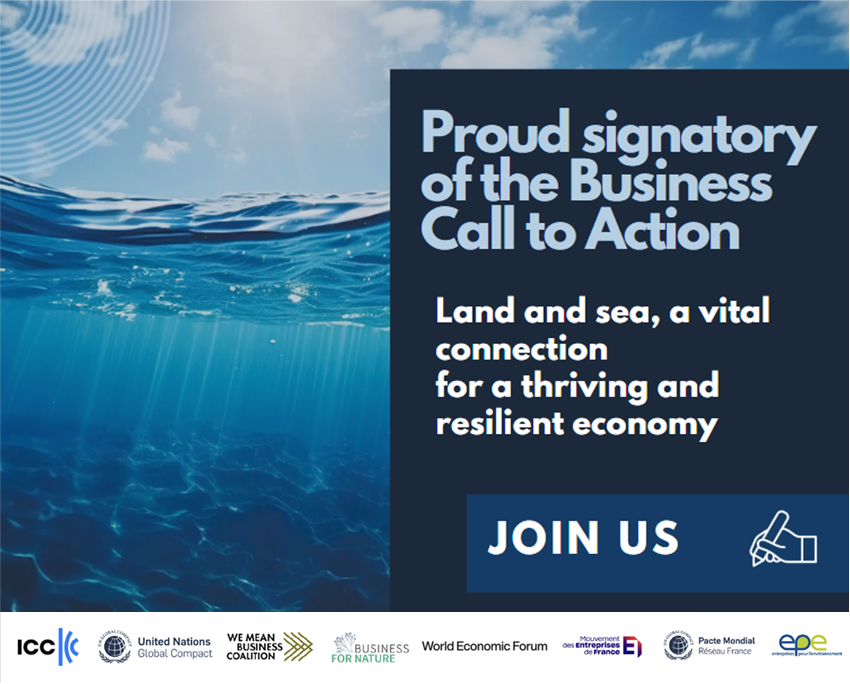
The Business Call to Action is a declaration led by the World Economic Forum (WEF), United Nations Global Compact (UNGC), and other international organizations. It calls for promoting business actions that support the prosperity of the global economy by promoting the sustainable use of the ocean.
Mizuho Financial Group has signed onto a Business Call to Action in June 2025. This marks the first time that a Japanese financial institution has become a signatory to such a commitment.
Through engagement with the blue economy, Mizuho seeks to actively drive the transition to a sustainable society while overcoming interconnected environmental issues such as climate change, natural capital and circular economy.
Mizuho Signs Business Call to Action at Third United Nations Ocean Conference
Net Zero Asset Managers initiative

The Net Zero Asset Managers initiative is an initiative by global asset management companies to achieve net zero greenhouse gas emissions.
Asset Management One has participated in the initiative since its launch in December 2020 and is committed to contributing to reducing greenhouse gas emissions to net zero by 2050 and joining worldwide measures to hold the increase in the global average temperature to well below 2°Celsius above pre-industrial levels and to pursue efforts to limit the temperature increase to 1.5°Celsius above pre-industrial levels.
30% Club Japan
The 30% Club Japan campaign aims to increase the ratio of women in important decision-making bodies of companies.
Mizuho Financial Group endorsed and joined the 30% Club Japan in July 2021.
The Human Capital Management Consortium

The Human Capital Management Consortium was established with the objective of promoting human capital management in Japanese companies in terms of practice and disclosure.
Mizuho Financial Group and Asset Management One joined the Consortium at its launch in August 2022.
ESG Disclosure Study Group

The ESG Disclosure Study Group carries out research related to ESG information disclosure with the goal of establishing harmony between the sustained development of society and the individual efforts of companies to enhance corporate value and growth.
Mizuho Financial Group has been taking part in the study group since its establishment in June 2020, and Mizuho Bank, and Mizuho Trust & Banking joined in July 2022.
Japan Center for Engagement and Remedy on Business and Human Rights (JaCER)

The Japan Center for Engagement and Remedy on Business and Human Rights (JaCER) provides a grievance platform based on the United Nations Guiding Principles on Business and Human Rights.
Mizuho Financial Group joined JaCER in July 2023 to receive reports on human rights abuse throughout its business value chain. We now operate a professional and impartial grievance mechanism leveraging JaCER’s Engagement and Remedy Platform.
Efforts Related to the Sustainable Development Goals
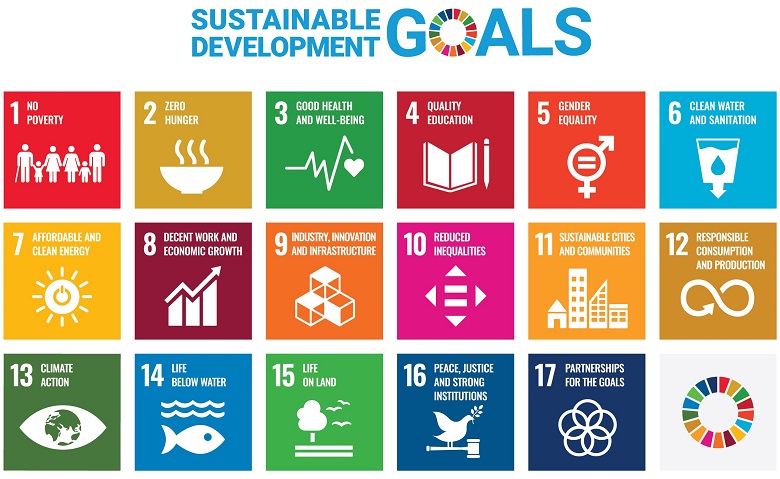
The Sustainable Development Goals (SDGs) of the 2030 Agenda for Sustainable Development were adopted at the UN Summit held in September 2015, and are composed of 17 goals and 169 targets that the world should aim to address by 2030. Corporations are also expected to implement more significant initiatives and make contributions toward the achievement of the SDGs.
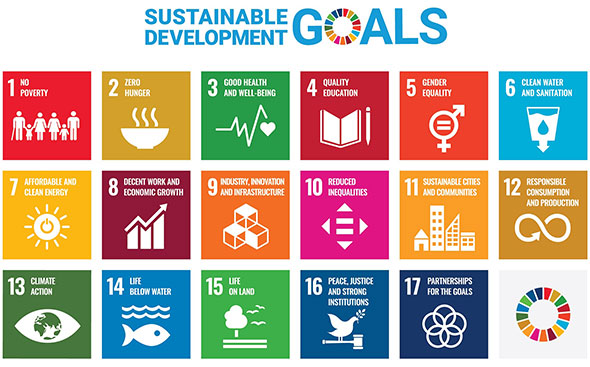
Our Approach to the Sustainable Development Goals
At Mizuho, we take an integrated view on sustainability and business strategy. We have designated materiality areas based on the expectations of society (the expectations stakeholders have about Mizuho’s impact on society) and their importance for Mizuho (medium- to long-term impact on our corporate value and compatibility with Mizuho’s strategies and business areas), and are proactively implementing initiatives that contribute to the SDGs.
Materiality
Main Initiatives
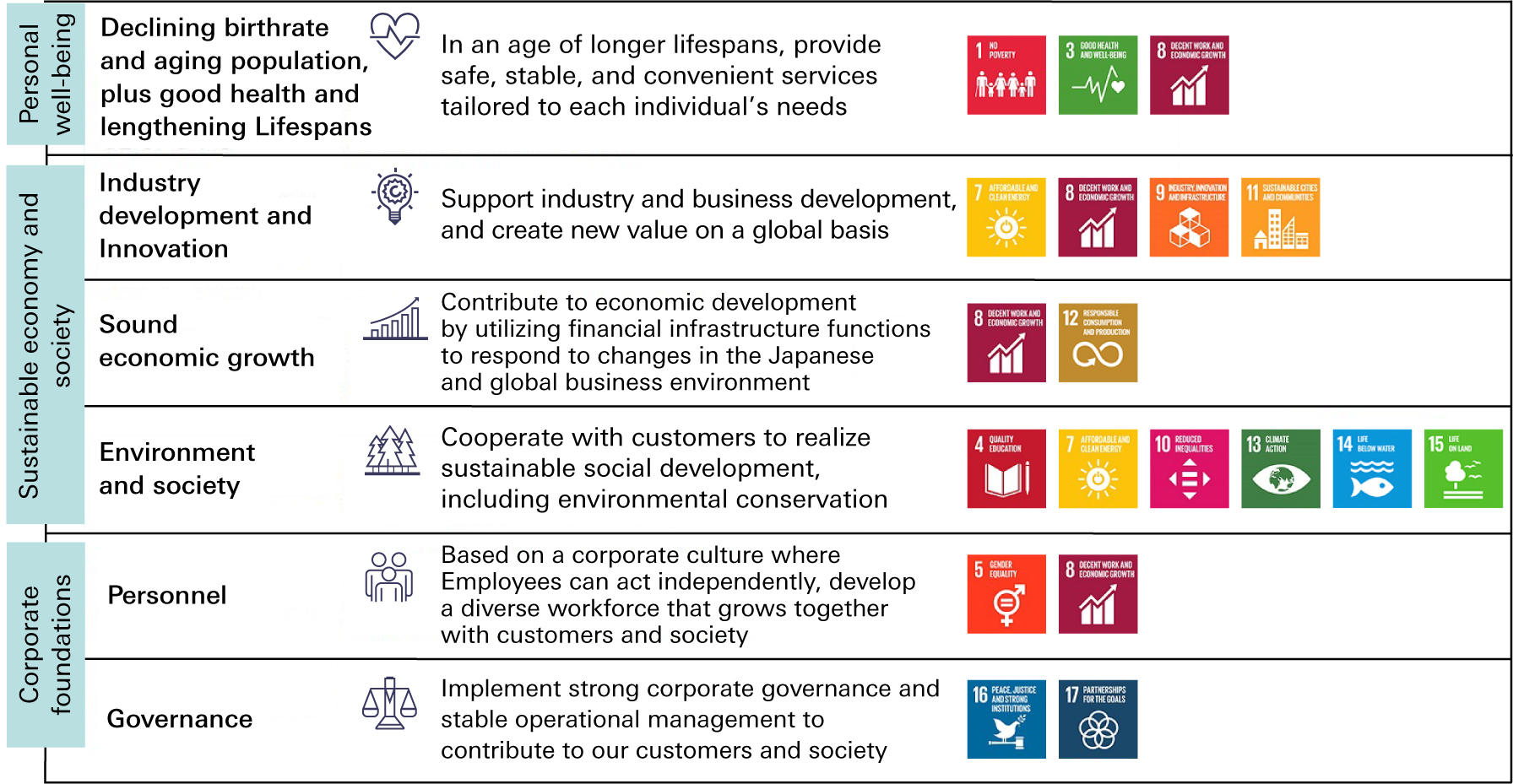
Declining birthrate and aging population, plus good health and lengthening lifespans.


In an age of longer lifespans, provide safe, stable, and convenient services tailored to each individual’s needs
Industry development & innovation


Support industry and business development, and create new value on a global basis
Sound economic growth

Contribute to economic development by utilizing financial infrastructure functions to respond to changes in the Japanese and global business environment
Environment & society


Cooperate with customers to realize sustainable social development, including environmental conservation
Personnel

Based on a corporate culture where employees can act independently, develop a diverse workforce that grows together with customers and society
Governance


Implement strong corporate governance and stable operational management to benefit customers and society
Initiatives for the Sustainable Development Goals
As part of our efforts to achieve the SDGs, we are strengthening our promotion structure and holding seminars and other events. We are pursuing the SDGs as a united group, leveraging the expert functions of each of our group companies.
Strengthening of promotion structure
To support our clients' SDG and ESG initiatives, we are developing a group-wide sustainability promotion structure.
Strengthening support for sustainable businesses
Seminars and other events
Joint sustainability forum with Nikkei
Mizuho Financial Group, Mizuho Bank, Mizuho Trust & Banking, Mizuho Securities, former Mizuho Research & Technologies*, and Asset Management One conducted an online forum in collaboration with Nikkei Inc.
*Mizuho Research & Technologies merged with Mizuho Bank in April 2026.
Event period
Theme
December 2021
The Next Stage of Carbon Neutral Practices and Sustainability: Toward Achieving True SDGs
December 2022
The Merits of Sustainable Business: Transition in Practice and Engagement with Emerging Initiatives (Biodiversity, Human Capital, Impact Investments)
January 2024
Meeting Diversified Sustainability Challenges: Toward Sustainable Society through Collaboration and Cocreation
December 2024
Essential Sustainability Insights for Businesses: Perspectives from Leading Experts in Industry, Government, Academia, and Finance
External Evaluation
Awards
ESG overall
In February 2026, at the 7th "ESG Finance Awards Japan" sponsored by Japan's Ministry of the Environment in order to promote and expand ESG finance, Mizuho Bank was awarded the Gold Award in the Indirect Financing Category, while Mizuho Securities was awarded the Bronze Award in the Financial Services Category (Securities).
ESG overall
In February 2025, at the 6th "ESG Finance Awards Japan" sponsored by Japan's Ministry of the Environment in order to promote and expand ESG finance, Mizuho Bank was awarded the Gold Award in the Indirect Financing Category, while Mizuho Securities was awarded the Bronze Award in the Financial Services Category (Securities).
Environment
In April 2024, Mizuho Securities won two categories, namely the "Lead manager of the year, transition bonds" and "Lead manager of the year, green bonds – local authority/municipality," at the Sustainable Debt Awards 2024, published by Environmental Finance, a world-leading British professional journal.
Society
In March 2025, Mizuho Financial Group and four of its group companies* were recognized under the Health & Productivity Management Outstanding Organization 2025 (Large enterprise category), which is jointly administered by Japan's Ministry of Economy, Trade and Industry and the Tokyo Stock Exchange. We have been selected for this program which recognizes companies that strategically promote employee health from a management perspective.
* Mizuho Bank, Ltd.; Mizuho Trust & Banking Co., Ltd.; Mizuho Securities Co., Ltd.; and Mizuho Research & Technologies, Ltd.
Society
In December 2024, Mizuho Financial Group and four other Mizuho group companies were awarded Best Workplace, the highest honor of the D&I Awards 2024. This was the 4th year running for us to receive this recognition under Job Rainbow’s corporate Diversity & Inclusion (D&I) evaluation system.
Society
In November 2024, Mizuho Financial Group and four other Mizuho group companies* received the top rating of gold on the PRIDE Index, an index created by voluntary organization "work with Pride" to evaluate companies' efforts toward inclusion for the LGBT community. This was the eighth year in a row for our five Mizuho group companies to receive the gold rating.
*Mizuho Bank, Ltd.; Mizuho Trust & Banking Co., Ltd.; Mizuho Securities Co., Ltd.; and Mizuho Research & Technologies, Ltd.
Mizuho receives gold rating in PRIDE Index for LGBT+-related initiatives

Society
In November 2024,Mizuho Financial Group and four other Mizuho group companies* have received the top rating of gold on the PRIDE Index, an index created by voluntary organization "work with Pride" to evaluate companies' efforts toward inclusion for the LGBT community. This is the eight years in a row for our five Mizuho group companies to receive the gold rating.
* Mizuho Bank, Ltd.; Mizuho Trust & Banking Co., Ltd.; Mizuho Securities Co., Ltd.; and Mizuho Mizuho Research& Technologies, Ltd.
Mizuho receives gold rating in PRIDE Index for LGBT+-related initiatives
Society
In November 2024, Mizuho Financial Group received 4.5stars on the 8th Nikkei Smart Work Management Survey, which selects leading companies that are driving the productivity revolution by reforming working styles.
Governance
Mizuho Financial Group received the following awards for a high evaluation of the comprehensiveness of information displayed on our website as well as our active and innovative stance toward information disclosure and presenting information in an easily usable format.
Received Gold Award in the BroadBand Security Gomez IR Site Ranking 2024
Received Award of Excellence in the Daiwa IR 2024 Internet IR Awards
Selected as an Excellent Company in the BroadBand Security Gomez ESG Site Ranking 2024
Governance
In May 2024 Mizuho Bank was granted the highest three–star ranking and received awards in HDI–Japan's "Ranking of Customer Service."

ESG overall
In February 2024, Mizuho Securities was awarded the Bronze Award in the Financial Services Category (Securities) at the 5th "ESG Finance Awards Japan," sponsored by Japan's Ministry of the Environment in order to promote and expand ESG finance.
Environment
In April 2023, Mizuho Securities won two categories, namely the "Award for innovation – use of proceeds (green bond)" and "Lead manager of the year – green bonds – local authority/municipality," at the Bond Awards 2023, published by Environmental Finance, a world-leading British professional journal.
Society
In March 2024, Mizuho Financial Group and four of its group companies* were recognized under the Health & Productivity Management Outstanding Organization 2024 (Large enterprise category),which is jointly administered by Japan's Ministry of Economy, Trade and Industry and the Tokyo Stock Exchange. We have been selected for this program which recognizes companies that strategically promote employee health from a management perspective.
* Mizuho Bank, Ltd.; Mizuho Trust & Banking Co., Ltd.; Mizuho Securities Co., Ltd.; and Mizuho Research & Technologies, Ltd.
Society
In December 2023, Mizuho Financial Group and four other Mizuho group companies are awarded Best Workplace, the highest honor of the D&I Awards 2023. This is the third year running for us to receive this recognition under JobRainbow’s corporate Diversity & Inclusion (D&I) evaluation system.Mizuho receives Semi-Grand Prize at the D&I Awards 2023
Society
In November 2023, Mizuho Financial Group and four other Mizuho group companies* have received the top rating of gold on the PRIDE Index, an index created by voluntary organization "work with Pride" to evaluate companies' efforts toward inclusion for the LGBT community. This is the seven year in a row for our five Mizuho group companies to receive the gold rating.
* Mizuho Bank, Ltd.; Mizuho Trust & Banking Co., Ltd.; Mizuho Securities Co., Ltd.; and Mizuho Mizuho Research & Technologies, Ltd.
Mizuho receives gold rating in PRIDE Index for LGBT+-related initiatives

Society
In November 2022, Mizuho Financial Group and four other Mizuho group companies have received the grand prize at the Japan Alumni Awards 2022, which was hosted by Alumni Lab.Mizuho receives grand prize at Japan Alumni Awards 2023
Society
In November 2023, Mizuho Financial Group received 5 stars on the 7th Nikkei Smart Work Management Survey, which selects leading companies that are driving the productivity revolution by reforming working styles.

Governance
Mizuho Financial Group received the following awards for a high evaluation of the comprehensiveness of information displayed on our website as well as our active and innovative stance toward information disclosure and presenting information in an easily usable format.
Received Gold Award in the BroadBand Security Gomez IR Site Ranking 2023
Received Award of Excellence in the Daiwa IR 2023 Internet IR Awards
Selected as an Excellent Company in the BroadBand Security Gomez ESG Site Ranking 2023
Governance
Mizuho Securities received the "Five Star Certification" in the inquiry desk and web support category of customer service under HDI–Japan's Five Star Certification Program for the third year in a row.


Governance
In July 2023 Mizuho Bank and Mizuho Securities were granted the highest three–star ranking and received awards in HDI–Japan's "Ranking of Customer Service" and "Ranking of Web Support Portal."


ESG overall
In February 2023, Mizuho Securities was awarded the Silver Award in the Financial Services Category (Securities) at the 4th "ESG Finance Awards Japan," sponsored by Japan's Ministry of the Environment in order to promote and expand ESG finance.
Environment
In December 2022, Mizuho Securities received the Outstanding Performance Award at the 8th (2022) Sustainable Finance Awards hosted by the Research Institute for Environmental Finance.
Society
In March 2023, Mizuho Financial Group and four of its group companies* were recognized under the Health & Productivity Management Outstanding Organization 2023 (Large enterprise category),which is jointly administered by Japan's Ministry of Economy, Trade and Industry and the Tokyo Stock Exchange.We have been selected for this program which recognizes companies that strategically promote employee health from a management perspective.
* Mizuho Bank, Ltd.; Mizuho Trust & Banking Co., Ltd.; Mizuho Securities Co., Ltd.; and Mizuho Research & Technologies, Ltd.
Society
In February 2023, Mizuho Financial Group and four other Mizuho group companies are awarded Best Workplace, the highest honor of the D&I Awards 2022. This is the second year running for us to receive this recognition under JobRainbow’s corporate Diversity & Inclusion (D&I) evaluation system.Mizuho Financial Group awarded Best Workplace at the D&I Awards 2022
Society
In November 2022, Mizuho Financial Group and four other Mizuho group companies* have received the top rating of gold on the PRIDE Index, an index created by voluntary organization "work with Pride" to evaluate companies' efforts toward inclusion for the LGBT community. This is the six year in a row for our five Mizuho group companies to receive the gold rating.
* Mizuho Bank, Ltd.; Mizuho Trust & Banking Co., Ltd.; Mizuho Securities Co., Ltd.; and Mizuho Mizuho Research & Technologies, Ltd.
Mizuho receives gold rating in PRIDE Index for LGBT+-related initiatives

Society
In November 2022, Mizuho Financial Group and four other Mizuho group companies have received the grand prize at the Japan Alumni Awards 2022, which was hosted by Alumni Lab.Mizuho receives grand prize at Japan Alumni Awards 2022
Society
In November 2022, Mizuho Financial Group received 4.5 stars on the 6th Nikkei Smart Work Management Survey, which selects leading companies that are driving the productivity revolution by reforming working styles.
Governance
Mizuho Financial Group received the following awards for a high evaluation of the comprehensiveness of information displayed on our website as well as our active and innovative stance toward information disclosure and presenting information in an easily usable format.
Received Gold Award in the BroadBand Security Gomez IR Site Ranking 2022
Received Award of Excellence in the Daiwa IR 2022 Internet IR Awards
Selected as an Excellent Company in the BroadBand Security Gomez ESG Site Ranking 2022
Governance
Mizuho Securities received the "Five Star Certification" in the inquiry desk and web support category of customer service under HDI–Japan's Five Star Certification Program for the second year in a row.


Governance
In July 2022 Mizuho Bank and Mizuho Securities were granted the highest three–star ranking and received awards in HDI–Japan's "Ranking of Customer Service" and "Ranking of Web Support Portal."

ESG Evaluation
The ESG initiatives that Mizuho has carried out thus far have received high evaluations, and Mizuho has been a part of social responsibility investment indices both inside and outside Japan.
External ESG evaluations
CDP(formerly the Carbon Disclosure Project)
In 2025, Mizuho Financial Group was selected for CDP’s Corporate A List of the highest performing companies.
Note: CDP is a global non-profit that runs the world's only independent environmental disclosure system for companies, capital markets, cities, states, and regions to manage their environmental impacts. It assesses corporate initiatives and information disclosure on climate change on an eight-point scale from A and A- down to D and D-. Companies that demonstrate the highest level of performance are recognized on its annual Corporate A List. In 2025, over 22,100 companies disclosed data through the CDP platform, which is widely utilized by investors and corporations.

FTSE4Good Index
FTSE Russell, a London Stock Exchange Group member company, has developed the FTSE4Good Index, which consists of stocks that have met global standards related to ESG practices.1

FTSE JPX Blossom Japan Index
The FTSE Blossom Japan index was designed by FTSE Russell, a member company of the London Stock Exchange Group, and consists of the stocks of Japanese companies that excel in meeting standards for ESG practices in and outside of Japan.2

FTSE JPX Blossom Japan Sector Relative Index
The FTSE Blossom Japan Sector Relative Index is designed as a sector neutral benchmark that reflects the performance of large, mid and small cap companies demonstrating strong environmental, social and governance practices (ESG) in Japan.3
MSCI Japan ESG Select Leaders Index
MSCI Nihonkabu ESG Select Leaders Index (Japanese only)
An index created by U.S. company MSCI, comprising stocks of companies that excel in meeting standards for ESG practices. MSCI Japan ESG Select Leaders Index is one of the ESG indexes utilized by GPIF4.
MSCI Japan Empowering Women Index (WIN)
This index has been developed by U.S. company MSCI and consists of the stocks of companies that have received high scores for gender diversity as calculated based on their data disclosed under the Act on Promotion of Women's Participation and Advancement in the Workplace4.
Morningstar Japan ex-REIT Gender Diversity Tilt Index (GenDi J)
An index created by Morningstar that evaluates companies' gender diversity initiatives. The constituent companies are divided into five gender priority groups based on Equileap’s evaluation, and Mizuho Financial Group was classified as "Group 1", the highest rated of the five5.

S&P/JPX Carbon Efficient Index
An index codeveloped by S&P Dow Jones Indices LLC and the Japan Exchange Group to determine the weighting of constituent companies within the universe of TOPIX, focusing on the status of disclosure of environmental information and the level of carbon efficiency (carbon-to-revenue footprint).
1: FTSE Russell (the trading name of FTSE International Limited and Frank Russell Company) confirms that Mizuho Financial Group has been independently assessed according to the FTSE4Good criteria, and has satisfied the requirements to become a constituent of the FTSE4Good Index Series. Created by the global index provider FTSE Russell, the FTSE4Good Index Series is designed to measure the performance of companies demonstrating strong Environmental, Social and Governance (ESG) practices. The FTSE4Good indices are used by a wide variety of market participants to create and assess responsible investment funds and other products.
2: FTSE Russell confirms that Mizuho Financial Group, Inc. has been independently assessed according to the index criteria, and has satisfied the requirements to become a constituent of the FTSE JPX Blossom Japan Index. Created by the global index and data provider FTSE Russell, the FTSE JPX Blossom Japan Index is designed to measure the performance of companies demonstrating specific Environmental, Social and Governance (ESG) practices. The FTSE JPX Blossom Japan Index is used by a wide variety of market participants to create and assess responsible investment funds and other products.
3: FTSE Russell confirms that Mizuho Financial Group, Inc. has been independently assessed according to the index criteria, and has satisfied the requirements to become a constituent of the FTSE JPX Blossom Japan Sector Relative Index. The FTSE JPX Blossom Japan Sector Relative Index is used by a wide variety of market participants to create and assess responsible investment funds and other products.
4: THE INCLUSION OF MIZUHO FINANCIAL GROUP, INC. IN ANY MSCI INDEX, AND THE USE OF MSCI LOGOS, TRADEMARKS, SERVICE MARKS OR INDEX NAMES HEREIN, DO NOT CONSTITUTE A SPONSORSHIP, ENDORSEMENT OR PROMOTION OF MIZUHO FINANCIAL GROUP, INC. BY MSCI OR ANY OF ITS AFFILIATES. THE MSCI INDEXES ARE THE EXCLUSIVE PROPERTY OF MSCI. MSCI AND THE MSCI INDEX NAMES AND LOGOS ARE TRADEMARKS OR SERVICE MARKS OF MSCI OR ITS AFFILIATES.
5: Morningstar, Inc., and/or one of its affiliated companies (individually and collectively, “Morningstar”) has authorized Mizuho Financial Group to use of the Morningstar® Japan ex-REIT Gender Diversity Tilt Index Logo (“Logo”) to reflect the fact that, for the designated ranking period, Mizuho Financial Group ranks within the top group of companies comprising the Morningstar® Japan ex-REIT Gender Diversity Tilt IndexSM (“Index”) on the issue of gender diversity in the workplace. Morningstar is making the Logo available for use by Mizuho Financial Group solely for informational purposes. Mizuho Financial Group’s use of the Logo should not be construed as an endorsement by Morningstar of Mizuho Financial Group or as a recommendation, offer or solicitation to purchase, sell or underwrite any security associated with Mizuho Financial Group. The Index is designed to reflect gender diversity in the workplace in Japan, but Morningstar does not guarantee the accuracy, completeness or timeliness of the Index or any data included in it. Morningstar makes no express or implied warranties regarding the Index or the Logo, and expressly disclaims all warranties of merchantability or fitness for a particular purpose or use with respect to the Index, any data included in it or the Logo. Without limiting any of the foregoing, in no event shall Morningstar or any of its third-party content providers have any liability for any damages (whether direct or indirect), arising from any party’s use or reliance on the Index or the Logo, even if Morningstar is notified of the possibility of such damages. The Morningstar name, Index name and the Logo are the trademarks or services marks of Morningstar, Inc. Past performance is no guarantee of future results.